
Introduction
Subcortical structures, such as the basal ganglia and thalamus, are integral components of the cortical- subcortical circuitry and are involved in a wide range of brain functions, including language and cognition[ 1 ]. These structures play an important role in speech motor control, language processing, and cognitive functions that support language production, such as memory, attention, and executive functions (e.g., planning and problem-solving)[ 1 , 2 ].Damage to these structures can result in impairments in motor planning, language formulation[ 3 ], and the integration and regulation of linguistic information[ 4 , 5 ].
One of the most common disorders affecting the basal ganglia is Parkinson's disease (PD), which is caused by the progressive loss of dopaminergic neurons in the substantia nigra, leading to reduced connectivity between the basal ganglia and the frontal motor regions [ 6 ]. Clinically, PD is a movement disorder characterized by symptoms such as rigidity, tremor, bradykinesia, gait disturbances, and postural instability[ 7 , 8 ]. These motor impairments often result in speech disorders, including reduced vocal loudness, decreased speech rate, monopitch, reduced prosody, phoneme repetitions, and difficulty initiating speech[ 9 , 10 ].
According to recent studies, in addition to motor speech disorders, patients with Parkinson's disease also exhibit impairments in linguistic processing, affecting both the receptive and expressive aspects of language[ 11 ]. Reported language impairments include reduced spontaneous speech, difficulty understanding metaphors and ambiguities, impaired comprehension of complex syntactic structures, difficulty making inferences, reduced verbal fluency, and deficits in other high-level language skills[ 11 - 17 ].
Linguistic impairments in progressive neurological disorders are often described as high-level language deficits, referring to impairments in the use of complex cognitive and linguistic processes[ 13 , 18 , 19 ] . High- level language deficits can only be assessed by evaluating cognitive and linguistic performance with sufficiently sensitive and complex assessment tools [ 13 , 14 ]. If assessment is limited to standard language tests commonly used for aphasia, these language impairments are unlikely to be detected[ 14 ].
To address this limitation, researchers developed a test with the sensitivity and complexity required to assess high-level language processes. Laakso, Brunnegård, Hartelius, and Ahlsén (2000) introduced the BESS test (the Persian version is referred to as the High-Level Language Test), which is sufficiently sensitive for evaluating high-level language skills. The test was developed at the Department of Logopedics and Phoniatrics, University of Gothenburg, Sweden, and was initially used in an experimental study involving individuals with multiple sclerosis[ 14 ]. The BESS consists of seven subtests: repetition of long sentences, recreating sentences, making inferences, comprehension of logico-grammatical sentences, comprehension of lexical and syntactic ambiguities, comprehension of metaphors, and word definitions. It has since been used to investigate high-level language impairments in individuals with multiple sclerosis and Parkinson's disease[ 13 , 14 ].
Laakso et al. assessed high-level language skills in nine Swedish-speaking women with multiple sclerosis (MS) using the BESS test and found that the mean scores of the patients with MS were lower than those of the control group. The BESS test (Bedomning av subtila sprakstorningar; Behavioral and Emotional Screening System) demonstrated good validity and reliability for assessing high-level language skills[ 14 ]. Subsequently, Berg, Björnram, Hartelius, Laakso, and Johnels (2003) used the BESS test to compare high- level language functions in 26 Swedish-speaking patients with Parkinson's disease (PD) without cognitive impairment and healthy controls. They found that the mean performance of the patients with PD was lower than that of the control group on language tasks, particularly in the making inferences subtest [ 13 ].
Given the distinct roles of language and pragmatics [ 20 ], it is reasonable to assume that differences between these domains can be identified and observed in relation to linguistic impairments. However, few studies have specifically investigated these differences. For example, Zanini, Tavano, and Fabbro (2010) investigated the language performance of nine bilingual patients with PD without cognitive impairment whose first language was Friulian and second language was Italian. Using spontaneous speech tasks to assess language impairments, they found that patterns of impairment differed between the two languages: phonological, morphological, and syntactic deficits were more pronounced in Friulian than in Italian [ 21 ].
Similarly, Rao, Reddy, and Narayanan (2017) examined the language abilities of 12 individuals with PD without cognitive impairment. They evaluated several linguistic measures, including the proportions of content and function words, the proportion of morphemes, the number of different words, problem- solving ability, and the type-token ratio. They concluded that the pattern of language impairment in Kannada differed from that observed in English. The authors suggested that, because of structural differences between the two languages, the pattern of language impairments reported in English cannot be generalized to Kannada[ 9 ].
Persian differs from many other languages in several linguistic aspects. For example, its basic syntactic structure follows a subject–object–verb (SOV) order, with the verb typically appearing at the end of the sentence, whereas English and Swedish generally follow a subject–verb–object (SVO) structure[ 22 ] . Unlike English, questions in Persian can often be formed using declarative sentence structures without changing the word order, simply by placing an interrogative word at the beginning of the sentence. In addition, modifiers within a noun phrase (e.g., adjectives or genitive constructions) follow the head noun. Stress patterns in Persian are generally regular, with lexical stress falling on the final syllable of most lexical categories, whereas verbs follow a distinct stress pattern. Persian also makes extensive use of metaphor and hyperbole and differs from other languages in several pragmatic features. For example, a plural verb may be used to convey respect or honor when referring to a singular subject.
Given these linguistic characteristics, the present study aimed to investigate high-level language impairments in Persian-speaking patients with Parkinson's disease.
Methods
Participants
This cross-sectional analytical study included 14 patients with Parkinson's disease (PD) recruited from the Neurology Clinic of Golestan Hospital, Ahvaz, during the second half of 2017 through systematic random sampling from the clinic's patient registry.
The inclusion criteria for the PD group were as follows:
- A diagnosis of PD confirmed by a neurologist;
- Persian as the participant's native language (based on the questionnaire);
- No history of neurological or traumatic disorders other than PD (based on the diagnosis of an experienced neurologist);
- No visual or hearing impairments (based on the patients' medical information forms);
- A score greater than 23 on the Persian version of the Mini-Mental State Examination (MMSE) [ 23 ]; and
- No evidence of aphasia, as determined by the Persian Aphasia Test administered by an experienced speech-language pathologist[ 24 ].
Fourteen healthy individuals, most of whom were neighbors of patients with PD, were recruited as the control group and matched to the patient group for age, sex, and education level. The inclusion criteria for the control group were as follows:
- Persian as the participant's native language;
- No history of neurological or traumatic disorders (based on interviews and medical history); and
- No visual or hearing impairments (based on interviews and medical history).
Disease severity in the PD group was assessed by a neurologist using the Hoehn and Yahr Scale[ 25 ].
The study was approved by the Ethics Committee of Ahvaz Jundishapur University of Medical Sciences (Code: IR.AJUMS.REC.1396.628). Written informed consent was obtained from all participants before their enrollment in the study.
High-Level Language Test
The Persian version of the High-Level Language Test (BESS-PV) (Bedomning av subtila sprakstorningar; Behavioral and Emotional Screening System-persian version)was used in this study. Its validity and reliability were evaluated by Rahimifar et al. (2019), who reported an intraclass correlation coefficient (ICC) of 0.96 and a Cronbach's alpha of 0.94 [ 26 ].
The BESS-PV consists of seven subtests (Fig. 1), with each subtest containing 10 items. According to the test manual, participants' responses are scored on a three-point scale (0, 1, or 3), with a maximum score of 3 for each item. The test yields eight scores: seven subtest scores and one total score, which is calculated as the sum of the scores from all seven subtests. The maximum score for each subtest is 30, resulting in a maximum total test score of 210.
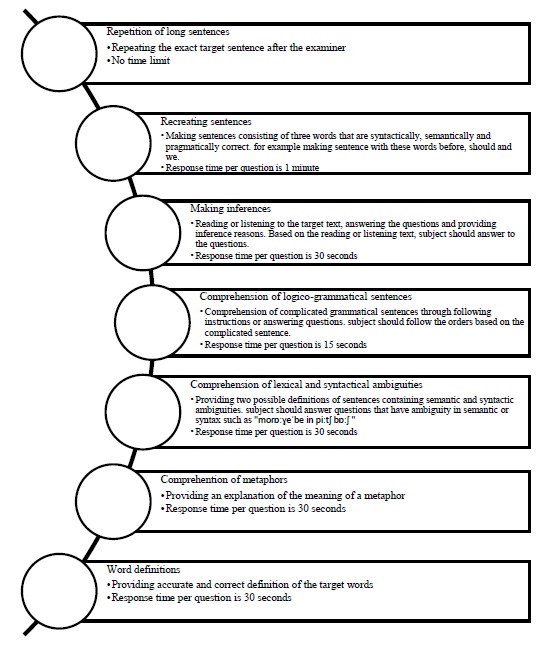
Figure 1. Subtests of the High-Level Language Test (BESS-PV)
All subtests, except repetition of long sentences, were administered under time constraints. The time limits ranged from 30 to 60 seconds, with Subtests 2 and 4 having time limits of 60 and 15 seconds, respectively. Participants who failed to respond within the allotted time or provided an incorrect response received a score of 0. In Subtests 3, 5, 6, and 7, participants who answered correctly after receiving a cue were awarded 1 point.
Before administering each subtest, the examiner provided a brief introduction and presented one or two sample items to familiarize participants with the task. If a participant did not respond appropriately after the explanation and demonstration, the instructions were repeated, and the participant was allowed to self- correct.
Repetition of Long Sentences
This subtest consists of 10 sentences, each ranging from 9 to 16 words in length, which are read aloud to the participant only once. The sentences are comparable in complexity to those found in contemporary newspapers or novels and include both main and subordinate clauses. To receive the maximum score, the participant must repeat each sentence verbatim.
Recreating Sentences
In this subtest, the participant is presented with three key words extracted from a given text and is asked to construct a sentence (i.e., something a person could naturally say) that includes all three words. The subtest consists of 10 such items. To receive the maximum score, the constructed sentence must be syntactically, semantically, and functionally correct.
Making Inferences
This subtest consists of seven short texts of different types (dialogues and narratives), with the length and complexity increasing progressively across the items. Participants are allowed to read and listen to each text before answering one or two questions requiring inferential reasoning. If a participant requires a cue to answer correctly, the score is reduced accordingly.
Comprehension of Logico-Grammatical Sentences
This subtest consists of 10 sentences designed to assess the comprehension of complex grammatical structures, such as passive constructions, inverted sentences, multi-step instructions, and double negation. The sentences are presented orally and read to the participant twice.
Comprehension of Ambiguous Sentences (Lexical and Syntactic)
This subtest includes 10 sentences with at least two possible interpretations, presented both verbally and pictorially. Six sentences contain lexical ambiguities, and four contain syntactic ambiguities. Participants are asked to provide two possible interpretations of each sentence. No cues regarding intonation or manner of presentation are provided.
Comprehension of Metaphors
This subtest consists of 10 sentences containing metaphorical expressions. Participants are asked to explain the meaning of each sentence. Literal interpretations are not awarded any points.
Word Definitions
In this subtest, participants are presented with 10 words and asked to provide the most accurate and complete definition possible for each word.
Procedure
All assessments were conducted individually by a single examiner at a time and location convenient for each participant. All patients were assessed during the "on" medication state, meaning that the evaluation was performed approximately one hour after medication intake. The entire assessment was completed in a single session lasting approximately 45–50 minutes. Due to the test's length, participants were allowed a short break midway through the session. All assessments were conducted in a standard testing room. Participants' responses were documented and analyzed after the assessment sessions.
Statistical Analysis
The Shapiro–Wilk test was used to assess the normality of the data, and the results confirmed that the data were normally distributed. Descriptive statistics included the mean, standard deviation (SD), frequency, and percentage. For inferential analysis, an independent-samples t-test was used to compare the mean subtest scores and total test scores between the PD and healthy control groups. Statistical significance was set at P < 0.05. All statistical analyses were performed using SPSS version 21.
Intra-rater reliability was evaluated using Cronbach's alpha coefficient. For this purpose, the responses of seven participants with PD and seven healthy controls were reanalyzed after a two-week interval, yielding a reliability coefficient of 0.87.
Results
This study included 14 patients with Parkinson's disease (PD), with a mean age of 56.0 ± 13.4 years, and 14 healthy control participants, with a mean age of 55.71 ± 13.04 years (Table 1).
| Patient | Gender | Age | Education level | Disease duration (years) | Disease stage | MMSE | Handedness | Medication |
|---|---|---|---|---|---|---|---|---|
| 1 | female | 75 | Associate’s degree | 8 | 2 | 26 | Right | Madopar |
| 2 | female | 47 | High school | 6 | 2 | 25 | Right | Levodopa, Amantadine, Pramipexole |
| 3 | male | 46 | Associate’s egree | 14 | 3 | 29 | Right | Levodopa, Sifropex |
| 4 | male | 59 | High school | 6 | 2 | 29 | Right | Madopar, Pramipexole |
| 5 | male | 65 | High school | 2 | 2 | 27 | Right | Madopar, Pramipexsol |
| 6 | male | 43 | High school | 11 | 2 | 29 | Right | Madopar, Sifrol |
| 7 | male | 58 | High school | 3 | 2 | 27 | left | Madopar |
| 8 | female | 63 | High school | 12 | 3 | 27 | Right | Madopar, Sifrol, Amantadine |
| 9 | male | 59 | High school | 8 | 2 | 27 | Right | Amantadine, Madopar, Pramipexole |
| 10 | male | 62 | Bachelor’s degree | 8 | 2 | 29 | Right | Amantadine, Madopar, Pramipexole |
| 11 | female | 26 | High school | 13 | 3 | 25 | left | Levodopa, Amantadine, Pramipexole |
| 12 | male | 76 | High school | 5 | 2 | 28 | Right | Madopar |
| 13 | male | 60 | High school | 2 | 2 | 29 | Right | Levodopa, Carbidopa, Pramipexole |
| 14 | female | 45 | High school | 8 | 2 | 27 | Right | Madopar, Sifrol |
| Note. MMSE=Mini-Mental State Examination | ||||||||
The comparison of the mean scores for high-level language performance between the PD and healthy control groups is presented in Table 2. As shown, among the BESS-PV subtests, the highest mean score was obtained for word definitions, whereas the lowest mean score was observed for making inferences. In addition, the healthy control group achieved significantly higher mean scores than the PD group on the repetition of long sentences, recreating sentences, and making inferences subtests, as well as on the total BESS-PV score (P < 0.05) (Table 2 and Fig. 2).
| Test/ subtest | PD | HC | CI 95% | Mean difference | P-Value | |
|---|---|---|---|---|---|---|
| Mean± SD | Mean± SD | upper | Lower | |||
| RepSen | 12.42±4.63 | 17.71±4.44 | -1.757 | -8.814 | 5.28 | *0.005 |
| RecrSen | 13±4.47 | 17.42±4.18 | -1.064 | -7.792 | 4.42 | *0.012 |
| MInf | 12.92±3.66 | 19.28±3.42 | -3.598 | -9.115 | 6.35 | *>0.001 |
| LGSen | 19.07±3.64 | 20.57±3.69 | 1.351 | -4.351 | 1.5 | 0.29 |
| AmbSen | 17.07±6.63 | 20.21±5.36 | 1.546 | -7.832 | 3.14 | 0.18 |
| Met | 17.14±4.86 | 20.42±4.36 | 0.304 | -6.875 | 3.28 | 0.07 |
| WDef | 22.28±8.21 | 24.07±7.47 | 4.316 | -7.887 | 1.78 | 0.55 |
| BESS-PV | 113.92±23.44 | 139.71±20.38 | -8.719 | -42.851 | 25.78 | *0.005 |
| Note. HC=healthy control, SD=standard deviation, CI=confidence Interval, RepSen= Repetition of long sentences, RecrSen= Recreating sentences, MInf= making inferences, LGSen= Comprehension of logico-grammatical sentences, AmbSen= comprehension of ambiguous sentences, Met= Comprehension of metaphors, WDef= Word definitions, BESS-PV= Persian version of the high-level language test,* P-values significant at α level less than 0.05. | ||||||
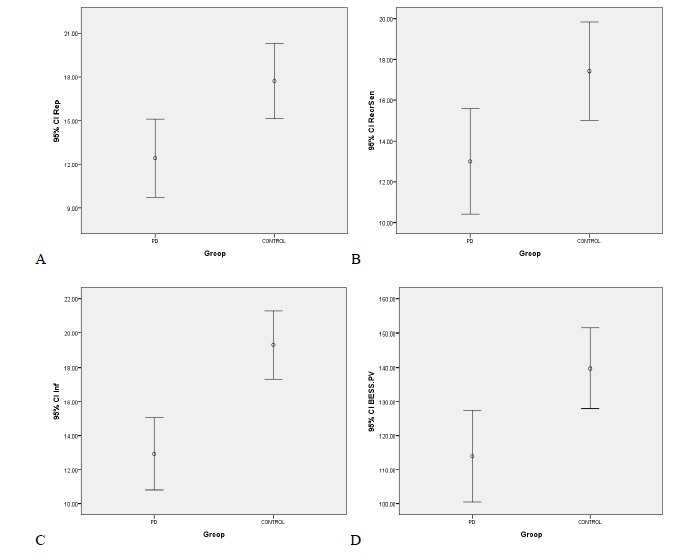
Figure 2. Performance of the Parkinson's disease (PD) group on the High-Level Language Test (BESS-PV).Note. A) Subtest of repetition of long sentences, B) Subtest of recreating sentences, C) Subtest of making inferences, D) Total BESS-PV test score. Error bars are 95% confidence intervals.
Discussion
This study aimed to investigate high-level language skills in patients with Parkinson's disease (PD) using the Persian version of the BESS test (BESS-PV). The results showed that the mean scores of the PD group were lower than those of the healthy control group across all subtests and the total test score. Significant differences were observed in the repetition of long sentences, recreating sentences, and making inferences subtests, as well as in the total BESS-PV score (P < 0.05) (Fig. 2).
Similarly, Berg et al. used the BESS test to evaluate high-level language performance in patients with PD. They reported that the mean scores of all subtests were lower in cognitively intact patients with PD than in healthy controls. However, a statistically significant difference was found only in the making inferences subtest[ 13 ].
One of the high-level language skills examined in this study was repetition of long sentences, and the results showed that the PD group scored significantly lower than the healthy control group on this subtest (P< 0.05). Performance on sentence repetition depends on both working memory capacity and linguistic abilities, particularly lexical, morphosyntactic, and semantic processing[ 27 ] . To accurately repeat a sentence, participants must first comprehend the words in the sentence and then generate a motor plan to produce them in the correct sequence[ 28 ] . Successful performance on this task requires maintaining information in working memory[ 29 ]. However, as sentence length increases, participants cannot rely solely on memory; instead, they must engage the grammatical system to process, analyze, and reconstruct the sentence's meaning before repeating it [ 27 ]. Therefore, performance on this subtest is expected to be influenced by a broad range of language skills[ 28 ].
Working memory and executive function play essential roles in both language comprehension and production. Impairments in these cognitive processes may result in the improper encoding or loss of information during language processing [ 17 ]. The findings of the present study are consistent with those of previous studies [ 12 , 17 ]. In contrast, Bayles, Tomoeda, Wood, and Cruz (1997) reported no significant difference between the PD and control groups on this subtest[ 29 ]. This discrepancy may be explained not only by differences in sample size but also by differences in task characteristics. The task used by Bayles et al. consisted of 10 sentences, half containing six syllables and the other half nine syllables. In contrast, the task used in the present study included 10 sentences ranging from 15 to 28 syllables. Likewise, Berg et al. found no significant difference between the two groups on this subtest [ 13 ]. This inconsistency may reflect differences in the linguistic structures of Persian and Swedish or differences in the demands placed on working memory. As Troche and Altman noted, working memory and executive function are fundamental to language processing. Given these linguistic and cognitive differences, it is reasonable to assume that speakers of Persian and Swedish may perform differently on this subtest.
The present study also demonstrated a significant difference between the PD and healthy control groups in the recreating sentences subtest (P < 0.05). This subtest assesses the ability to plan and formulate sentences that are syntactically, semantically, and pragmatically appropriate[ 13 ] . The basal ganglia play an important role in integrating and monitoring linguistic information during language processing [ 30 ]. Damage to these structures can impair motor planning and accurate language formulation [ 11 ]. Disruption of the functional connectivity between the cortex and subcortical structures may reduce the cortex's ability to organize and integrate the three target words into a syntactically, semantically, and pragmatically meaningful sentence. Therefore, the poorer performance of patients in the recreating sentences subtest may reflect inefficient sentence-generation strategies (possibly related to cognitive impairment) or difficulties in integrating and monitoring linguistic information during language formulation[ 30 ] .
The findings of Lewis, Lapointe, Murdoch, and Chenery (1998) are consistent with those of the present study[ 15 ]. In contrast, Bayles et al. found no evidence of impaired sentence formulation in patients with PD without cognitive impairment[ 29 ]. In addition to differences in sample size, this discrepancy may be attributable to methodological differences. In their study, sentence formulation was assessed using syntactic and semantic judgment and correction tasks, in which participants identified incorrect sentences and corrected them when necessary[ 29 ]. In the present study, however, participants were presented with three words and asked to generate a sentence that was syntactically, semantically, and pragmatically appropriate using those words. Furthermore, Berg et al. reported no significant differences between the PD and control groups on this subtest[ 13 ] . This discrepancy may be related to differences in participant characteristics, study methodology, or the linguistic properties of the language being assessed.
In the present study, the mean score of the PD group on the making inferences subtest was significantly lower than that of the healthy control group (P < 0.05), which is consistent with previous findings[ 13 , 31 - 33 ]. This subtest assesses the ability to draw conclusions and understand relationships by identifying omitted and implicit information within a text. The ability to make inferences is essential for effective conversation comprehension. It is influenced by reading ability and reading strategies, is closely related to listening comprehension skills, and requires individuals to shift their attention from specific details to a broader understanding of the text[ 13 ].
The ability to make inferences is also closely associated with working memory capacity during language processing. Functional deterioration of the frontostriatal pathways may limit access to working memory resources in many patients with PD, thereby negatively affecting their ability to make inferences[ 31 ].
The results of the word definitions subtest showed no significant difference between the PD and healthy control groups. While some previous studies support our findings[ 13 , 29 ], Lewis et al. reported a significant difference between patients and healthy controls on this subtest[ 15 ]. This discrepancy may be related to differences in disease severity among the study participants. In the present study, 78.6% of the patients were classified as Stage 2 according to the Hoehn and Yahr Scale, whereas all patients in the study by Lewis et al. were classified as Stage 3. Because PD is a progressive neurodegenerative disorder, it is reasonable to assume that language impairments vary according to the stage of disease progression.
The word definitions subtest evaluates an individual's ability to identify a word's semantic attributes and select the features that distinguish it from other words with similar meanings. Deficits in mental flexibility and language processing may impair performance on this task by reducing an individual's ability to generate accurate and distinctive definitions of words [ 15 ].
In the present study, no significant differences were found between the PD and healthy control groups on the comprehension of metaphors and ambiguous sentences subtests. These findings are consistent with those of previous studies[ 13 , 15 ].The absence of significant differences may be attributable to the relatively homogeneous disease severity among the patients (all were classified as Hoehn and Yahr Stages 2–3) or to differences in the linguistic structures of the languages studied.
Overall, the findings demonstrate that patients with PD performed significantly worse than healthy controls on the Persian version of the High-Level Language Test (BESS-PV). The study most comparable to ours is that of Berg et al., which also examined overall high- level language performance. However, unlike the present study, Berg et al. found no significant difference in the total BESS score between the PD and healthy control groups[ 13 ]. This discrepancy may be attributable to differences in sample size.
From a clinical perspective, impairments in high- level language abilities may affect daily communication in two important ways. First, they can compromise expressive communication by limiting an individual's ability to convey thoughts and intentions through grammatically accurate and well-structured sentences, potentially leading to misunderstandings. Second, individuals with impaired high-level language skills may have difficulty understanding the sentences and communicative intentions of family members, friends, or caregivers. These difficulties are particularly evident when processing long sentences with complex syntactic structures. Therefore, family members, friends, caregivers, and healthcare professionals should use clear, concise, and straightforward language when communicating with individuals with Parkinson's disease. This consideration may help facilitate more effective communication and improve everyday interactions.
The Persian verbal system has a more complex grammatical structure for expressing tense, aspect, mood, number, and person than many European and Asian languages [ 22 ]. Moreover, from a pragmatic perspective, Persian differs from these languages in stylistic conventions, the implicit meanings of words and sentences, and the emotional associations conveyed through language. Differences also exist in the structure of noun phrases, the use of determiners, and the ordering of sentence constituents. In addition, the phonotactic and phonological rules of Persian differ from those of many other languages. Collectively, these linguistic characteristics may contribute to differences in language performance across speakers of different languages.
Suggestions for Future Research
Given the differences in the location of neurological damage across disorders, similar studies should be conducted in patients with Alzheimer's disease and other neurodegenerative conditions. Future research is also recommended to investigate the effects of disease severity, disease duration, and the severity of depression on language function in patients with PD. Moreover, when evaluating and treating patients with PD, clinicians should consider not only speech impairments but also language function and the underlying cognitive processes. Because dopaminergic medications may influence language performance, future studies should assess patients during the "off" medication state.
The limitations of this study include the relatively long assessment duration, participant fatigue, the exclusion of some patients with severe speech disorders, and the small sample size across disease severity groups.
Conclusion
The present study indicates that, as in other languages, Persian-speaking individuals with PD experience impairments in high-level language skills. Given the prominent role of language and communication abilities in the quality of life of patients with PD, speech-language pathologists should incorporate comprehensive language assessment protocols into the clinical evaluation of these patients to identify language impairments that may adversely affect their daily functioning and quality of life. The findings of this study have important clinical implications by providing new insights and expanding the current understanding of high-level language assessment in PD. Nevertheless, further large-scale studies are needed to investigate different aspects of language function and the underlying cognitive processes in patients with PD.
Acknowledgments
This work was supported by Ahvaz Jundishapur University of Medical Sciences (Master's Thesis Grant No. PHT.9620).
The authors would also like to thank the patients with Parkinson's disease and their families for their participation in this study.
Author Contributions
Concept and design: Majid Soltani, Negin Moradi Data acquisition: Masumeh Afshani, Shahram Rafie,
Davood Kashipazha
Data analysis and interpretation: Majid Soltani, Maryam Dastoorpour, Masumeh Afshani
Drafting of the manuscript: Masumeh Afshani, Majid Soltani
Critical revision of the manuscript for important intellectual content: Majid Soltani, Negin Moradi
Funding
The Rehabilitation Research Center, Ahvaz Jundishapur University of Medical Sciences, Ahvaz, Iran, funded this study.
Conflict of Interest
The authors declare no financial or non-financial conflicts of interest.
References
- Murdoch BE, Whelan BM. Speech and language disorders associated with subcortical pathology. Hoboken (NJ): Wiley- Blackwell; 2009.
- Crosson B, Novack TA, Trenerry MR. Subcortical language mechanisms: window on a new frontier. In: Phonological processes and brain mechanisms. New York: Springer; 1988. p. 24-58.
- Crosson B. Subcortical functions in language: a working model. Brain Lang. 1985; 25(2):257-292. DOI
- Braak H, Ghebremedhin E, Rüb U, Bratzke H, Del Tredici K. Stages in the development of Parkinson's disease-related pathology. Cell Tissue Res. 2004; 318(1):121-134. DOI
- Dominey PF, Inui T. Cortico-striatal function in sentence comprehension: insights from neurophysiology and modeling. Cortex. 2009; 45(8):1012-1018. DOI
- Fahn S. Description of Parkinson's disease as a clinical syndrome. Ann N Y Acad Sci. 2003; 991(1):1-14. DOI
- Jankovic J. Parkinson's disease: clinical features and diagnosis. J Neurol Neurosurg Psychiatry. 2008; 79(4):368-376. DOI
- Rahimifar P, Soltani M, Moradi N, Rafie S, Hesam S, Yazdi M. Evaluation of Acoustic Voice Quality Index in Persian-speaking Parkinson's patients compared to healthy controls and its association with disease severity based on UPDRS-III and dysarthria severity. J Voice. 2024.
- Rao AP, Reddy MB, Narayanan S. Micro and macrostructure discourse analysis in persons with idiopathic Parkinson's disease. SpeechLangHear. 2017; 20(4):196-205. DOI
- Rahimifar P, Soltani M, Rafie S, Hesam S, Yazdi M, Moradi N. Comparison of voice quality in Persian Parkinson patients with healthy counterparts using cepstral peak prominence and cepstral peak prominence-smooth and their relationship with disease severity (UPDRS-III) and disease duration. J Voice. 2025.
- Altmann LJP, Troche MS. High-level language production in Parkinson's disease: a review. Parkinsons Dis. 2011; 2011:238956. DOI
- Liu L, Luo XG, Dy CL, Ren Y, Feng Y, Yu HM, et al. Characteristics of language impairment in Parkinson's disease and its influencing factors. Transl Neurodegener. 2015; 4(1):2. DOI
- Berg E, Björnram C, Hartelius L, Laakso K, Johnels B. High- level language difficulties in Parkinson's disease. Clin Linguist Phon. 2003; 17(1):63-80. DOI
- Laakso K, Brunnegård K, Hartelius L, Ahlsén E. Assessing high-level language in individuals with multiple sclerosis: a pilot study. Clin Linguist Phon. 2000; 14(5):329-349. DOI
- Lewis FM, Lapointe LL, Murdoch BE, Chenery HJ. Language impairment in Parkinson's disease. Aphasiology. 1998; 12(3):193-206. DOI
- McNamara P, Durso R. Pragmatic communication skills in patients with Parkinson's disease. Brain Lang. 2003; 84(3):414-423. DOI
- Troche MS, Altmann LJP. Sentence production in Parkinson disease: effects of conceptual and task complexity. Appl Psycholinguist. 2012; 33(2):225-251. DOI
- Rahimifar P, Soltani M, Moradi N, Madjdinasab N, Latifi SM. A comparative study of repetition of long sentences skill in Persian-speaking multiple sclerosis patients and healthy subjects. Koomesh. 2017; 19(1):122-128.
- Rahimifar P, Isazadeh R, Soltani M, Ghobad R, Boazar A, Abaeian G, et al. Examination of high-level language skills in 2 phases of multiple sclerosis (relapsing-remitting & secondary progressive) in comparison with healthy counterparts. Med J Islam Repub Iran. 2025; 39:22. DOI
- Chambers JK, Schilling N, editors. The handbook of language variation and change. 2nd ed. Hoboken (NJ): Wiley-Blackwell; 2018.
- Zanini S, Tavano A, Fabbro F. Spontaneous language production in bilingual Parkinson's disease patients: evidence of greater phonological, morphological and syntactic impairments in native language. BrainLang. 2010; 113(2):84-89. DOI
- Momenian M, Nilipour R, Samar RG, Cappa SF, Golestani N. Morpho-syntactic complexity modulates brain activation in Persian-English bilinguals: an fMRI study. Brain Lang. 2018; 185:9-18. DOI
- Seyedian M, Falah M, Nourouzian M, Nejat S, Delavar A, Ghasemzadeh HA. Validity of the Farsi version of Mini-Mental State Examination. J Med Counc I R I. 2008; 25:408-414.
- Nilipour R, Pour Shahbaz A, Ghoreishi ZS, Yousefi A. Reliability and validity of Persian Aphasia Battery Test. Iran J Ageing. 2016; 10(4):182-190.
- Hoehn MM, Yahr MD. Parkinsonism: onset, progression, and mortality. Neurology. 1967; 17(5):427-442. DOI
- Rahimifar P, Soltani M, Latifi SM, Madjdinasab N, Moradi N. Reliability, validity, and normative investigation of Persian version of a High-Level Language Test (BESS). Appl NeuropsycholAdult. 2020; 27(6):540-548. DOI
- Theodorou E, Kambanaros M, Grohmann KK. Sentence repetition as a tool for screening morphosyntactic abilities of bilectal children with SLI. Front Psychol. 2017; 8:2104. DOI
- Klem M, Melby-Lervåg M, Hagtvet B, Lyster SAH, Gustafsson JE, Hulme C. Sentence repetition is a measure of children's language skills rather than working memory limitations. Dev Sci. 2015; 18(1):146-154. DOI
- Bayles KA, Tomoeda CK, Wood JA, Cruz RF, Azuma T, Montgomery EB. The effect of Parkinson's disease on language. J Med Speech Lang Pathol. 1997; 5(3):157-166.
- Lethlean JB, Murdoch BE. Performance of subjects with multiple sclerosis on tests of high-level language. Aphasiology. 1997; 11(1):39-57. DOI
- Monetta L, Pell MD. Effects of verbal working memory deficits on metaphor comprehension in patients with Parkinson's disease. BrainLang. 2007; 101(1):80-89. DOI
- Murray LL, Stout JC. Discourse comprehension in Huntington's and Parkinson's diseases. Am J Speech Lang Pathol. 1999; 8(2):137-148. DOI
- Montemurro S, Mondini S, Signorini M, Marchetto A, Bambini V, Arcara G. Pragmatic language disorder in Parkinson's disease and the potential effect of cognitive reserve. Front Psychol. 2019; 10:1220. DOI


