
Introduction
Cervical pain is a widespread musculoskeletal condition globally, affecting approximately 20.3% of individuals and demonstrating an annual incidence rate ranging from 33% to 65% in the general population [ 1 ]. Although neck pain may arise from multiple etiologies, a substantial proportion is classified as non- specific, with no clearly identifiable underlying pathology [ 2 ]. Chronic neck pain is particularly concerning due to its prolonged duration and its association with persistent symptoms, including ongoing pain, reduced cervical flexibility, and limitations in daily functional activities [ 3 ].
Previous research has identified pain and cervical muscle weakness as key contributors to restricted neck range of motion (RoM). Individuals with chronic neck pain often exhibit heightened fear of movement, which may lead to protective bracing behaviors that further restrict cervical mobility [ 4 , 5 ]. In addition, proprioceptive deficits are frequently reported in this population, an area that has gained growing attention in recent investigations due to its clinical relevance in cervical dysfunction.
Proprioceptive input from the sensorimotor system is essential for effective motor control, allowing the body to detect position, orientation, and movement without relying on visual cues . Impairments in joint position sense (JPS)—a central component of proprioception—have been documented across a range of clinical conditions [ 8 ], including recurrent ankle sprains, knee osteoarthritis, shoulder pathologies, persistent whiplash-associated disorders, chronic low back pain, and non-specific neck pain . Proprioceptive information arises from specialized receptors such as muscle spindles and mechanoreceptors located in muscles, ligaments, and joint capsules. Notably, the cervical region contains an exceptionally high density of muscle spindles, especially within the deep cervical musculature , making it particularly susceptible to proprioceptive dysfunction associated with musculoskeletal disorders.
Assessment of cervical proprioception commonly involves evaluating JPS, with joint position error tests (JPET) serving as the standard clinical method for measuring the accuracy of replicating neutral or target positions [ 11 ]. A 2015 systematic review reported that individuals with traumatic or chronic neck pain demonstrate significantly greater joint position errors compared to healthy controls, underscoring the importance of proprioceptive evaluation in this population [ 15 , 16 ].
A wide range of interventions has been investigated for the management of neck pain, with physiotherapy among the most commonly used non-invasive approaches. Physiotherapy typically incorporates therapeutic modalities, targeted exercises, and patient education to reduce pain, enhance cervical mobility, and improve overall functional well-being [ 17 ]. Evidence from a 2019 systematic review indicates that manual therapy, when combined with exercise, is more effective in reducing pain than exercise alone, highlighting the value of integrating multiple therapeutic components in the management of chronic neck pain [ 18 ].
Mulligan's mobilization, a widely used manual therapy technique, has demonstrated immediate pain- relieving effects and increased spinal RoM by correcting facet joint positional faults [ 19 , 20 ]. Although research on its influence on cervical proprioception remains limited, a 2017 study by Shereen et al.[ 21 ] reported significant improvements in proprioception following Mulligan mobilization compared to conventional treatment. The proposed mechanism suggests that correcting facet joint alignment may enhance the responsiveness of joint mechanoreceptors, thereby improving sensorimotor function. Chronic neck pain has also been associated with altered motor behavior, such as increased activation of superficial muscles and reduced deep cervical muscle engagement [ 22 ], which may affect muscle spindle activity and disrupt proprioceptive accuracy [ 6 ].
Kinesio taping is another intervention designed to facilitate muscle function and support sensorimotor control. Evidence, including studies by Alahmari et al. and Erdoğanoğlu et al., indicates that Kinesio taping can improve pain and proprioception, particularly when used in conjunction with other therapeutic modalities [ 23 , 24 ].
Despite the growing body of research on cervical rehabilitation, a notable gap persists regarding the immediate effects of applying Kinesio taping following Mulligan's mobilization, particularly in individuals with chronic non-specific neck pain. This study endeavors to address this gap and shed light on this critical interaction.
Methods
This pilot randomized controlled trial initially recruited 27 volunteers with chronic neck pain. After applying the predefined exclusion criteria, 24 eligible participants (9 men and 15 women), aged 20–55 years, with chronic non-specific neck pain were retained for the study. An orthopedic specialist referred all participants to the physiotherapy center for eligibility screening.
All assessments and interventions were conducted in separate dedicated rooms at the Physiotherapy Clinic of the Faculty of Rehabilitation, Tehran University of Medical Sciences.
Sample size estimation was performed using preliminary outcomes from the initial pilot cases. Based on cervical proprioception—measured through joint position error (JPE)—as the primary outcome, a power analysis was conducted using G*Power software (version 3.1). With an alpha level of 0.05, power set at 80%, and effect size derived from pilot results, the required sample size was determined to be 12 participants per group (total = 24), which aligned with the number of participants ultimately enrolled.
To be included in the study, participants were required to have a history of neck pain lasting at least 6 months, report pain intensity≥30 mm on the Visual Analog Scale (VAS), and score ≥10 on the Neck Disability Index (NDI). Exclusion criteria included any history of vertebral injury, fracture, surgery, dislocation, spinal instability, malignancy, vertebral infection, osteoporosis, rheumatoid arthritis (RA), ankylosing spondylitis (AS), cervical vascular disorders, radicular arm pain, or vestibular disorders. Individuals who had received manual therapy within the previous three months or who exhibited sensitivity or allergic reactions to Kinesio tape were also excluded.
Of the 27 individuals initially screened, one participant was excluded due to a history of cervical trauma from an accident, another due to a diagnosis of rheumatoid arthritis, and a third was withdrawn following an allergic reaction to Kinesio tape. Thus, 24 participants were ultimately included in the study (Fig. 1).
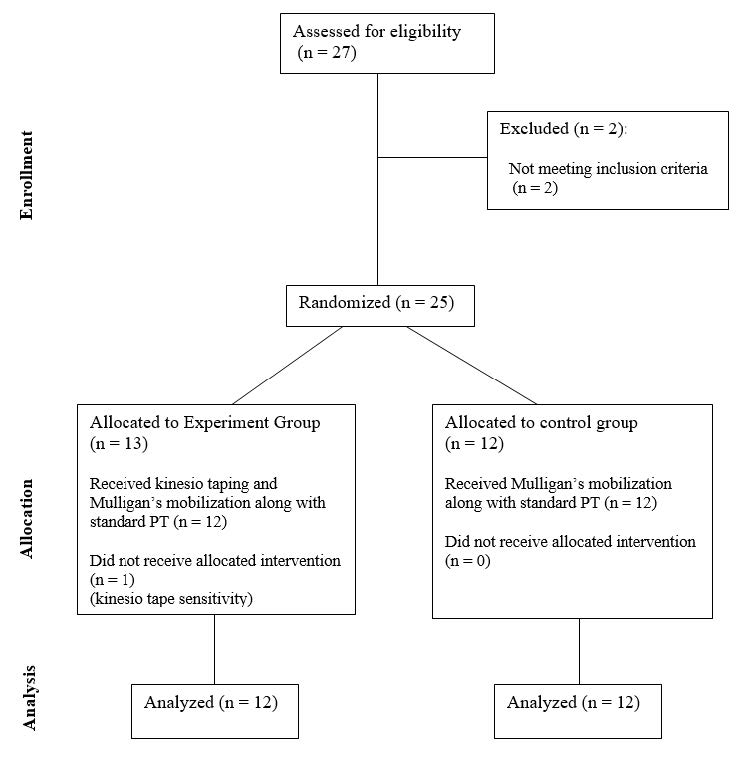
Figure 1. Flow diagram of screening and randomizing of the participants
The study protocol and informed consent procedures were reviewed and approved by the Ethics Committee of Tehran University of Medical Sciences (Ethical Approval Number: IR.TUMS.FNM.REC.1401.105).
All participants provided written informed consent before enrollment. All photographs included in the manuscript were taken by the authors with participants’ written permission and full ethical approval. Additionally, the trial was registered with the Iran Registry of Clinical Trials (IRCT) under the registration number IRCT20220910055927N1. https://irct.behdasht.gov.ir./trial/65920
Procedure
A single-blinded randomized controlled trial design was employed. Participants were informed that the study compared two commonly used therapeutic approaches with similar clinical applications; however, they remained blinded to the specific intervention administered to the other group. This preliminary study used convenience non-probability sampling.
Randomization was performed using computer- generated block randomization (block size = 4; allocation ratio = 1:1). Participants were randomly assigned to one of two groups: 1) Control group: Mulligan mobilization combined with conventional physiotherapy, and 2) Experimental group: Kinesio taping following Mulligan mobilization combined with conventional physiotherapy.
All assessments and interventions were performed by a licensed physiotherapist experienced in musculoskeletal rehabilitation. Baseline demographic data—including age, height, weight, and body mass index (BMI)—were collected before intervention (Table 1). The groups were comparable with respect to age and sex distribution.
| Experiment Group (n = 12) | Control Group (n = 12) | p-value | |
|---|---|---|---|
| Age(y) | 34.75 ± 9.21 | 35.16 ± 8.5 | 0.9 |
| Weight(kg) | 69.66 ± 13.24 | 70.83 ± 12.88 | 0.82 |
| Height(cm) | 168.41 ± 8.46 | 168.41 ± 7.84 | 1 |
| BMI (kg/m2) | 24.39 ± 3.08 | 24.87 ± 3.57 | 0.72 |
| Gender, female/male | 8/4 | 7/5 | 1 |
| Abbreviation: BMI= body mass index | |||
Outcome measures were assessed immediately before and immediately after the intervention session. No adverse events or treatment-related complications were reported by any participant during the study.
Outcome Measures
Cervical proprioception was the primary outcome measure, while pain intensity and cervical range of motion (RoM) were considered secondary outcomes.
Cervical Proprioception
Cervical joint repositioning errors (JPE), measured in degrees, were used to evaluate cervical proprioception, following the method described by Revel et al. [ 25 ]. Previous studies support the validity and reliability of the cervical JPE test using a laser pointer for assessing cervical proprioception [ 16 , 26 , 27 ].
During assessment, participants were seated upright on a chair with back support, facing a target positioned 90 cm away. Hips and knees were flexed at approximately 90°, and feet were placed flat on the floor. To prevent thoracic rotation, the participant’s chest was secured with a strap. The target consisted of a 40 cm diameter circle, aligned so that the laser pointer affixed to the participant’s forehead corresponded to the center of the circle (Fig. 2A).
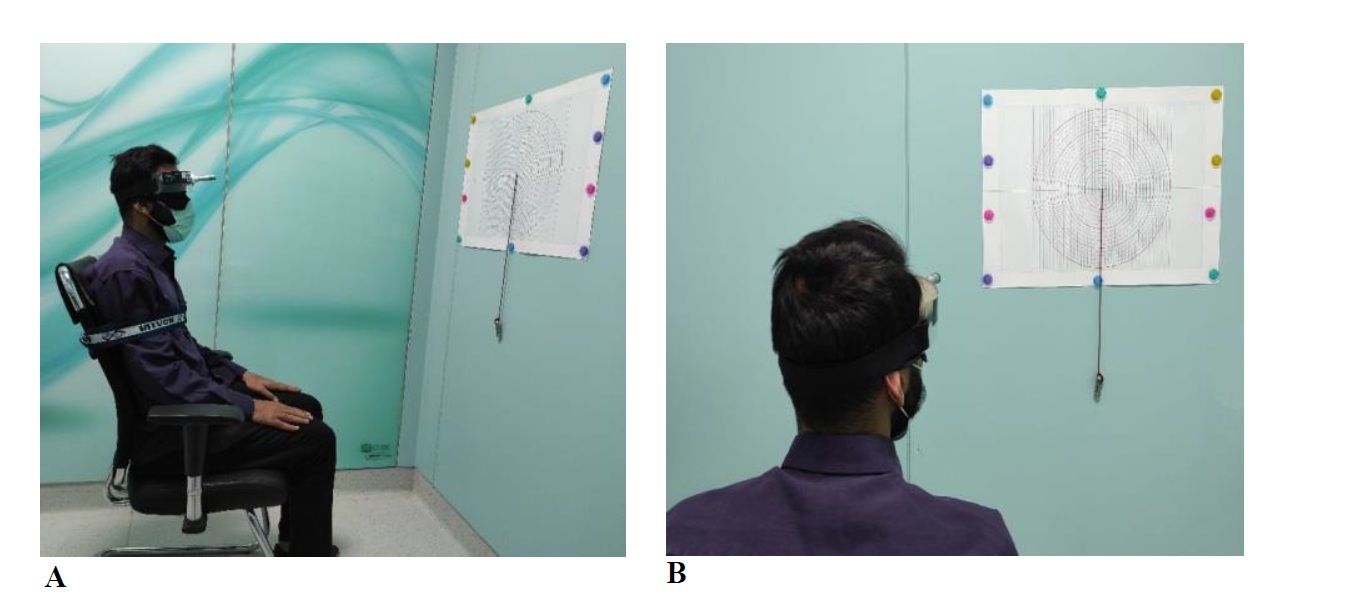
Figure 2. Target head position
The protocol began with participants memorizing the neutral cervical position for several seconds. Subsequently, with their eyes closed, participants were instructed to rotate their heads to one side and then slowly attempt to return to the previously memorized neutral position at the center of the circular target. The displacement of the laser pointer from the center of the circle was measured in centimeters and then converted into degrees using the following formula: (Fig. 3A) [ 26 ].
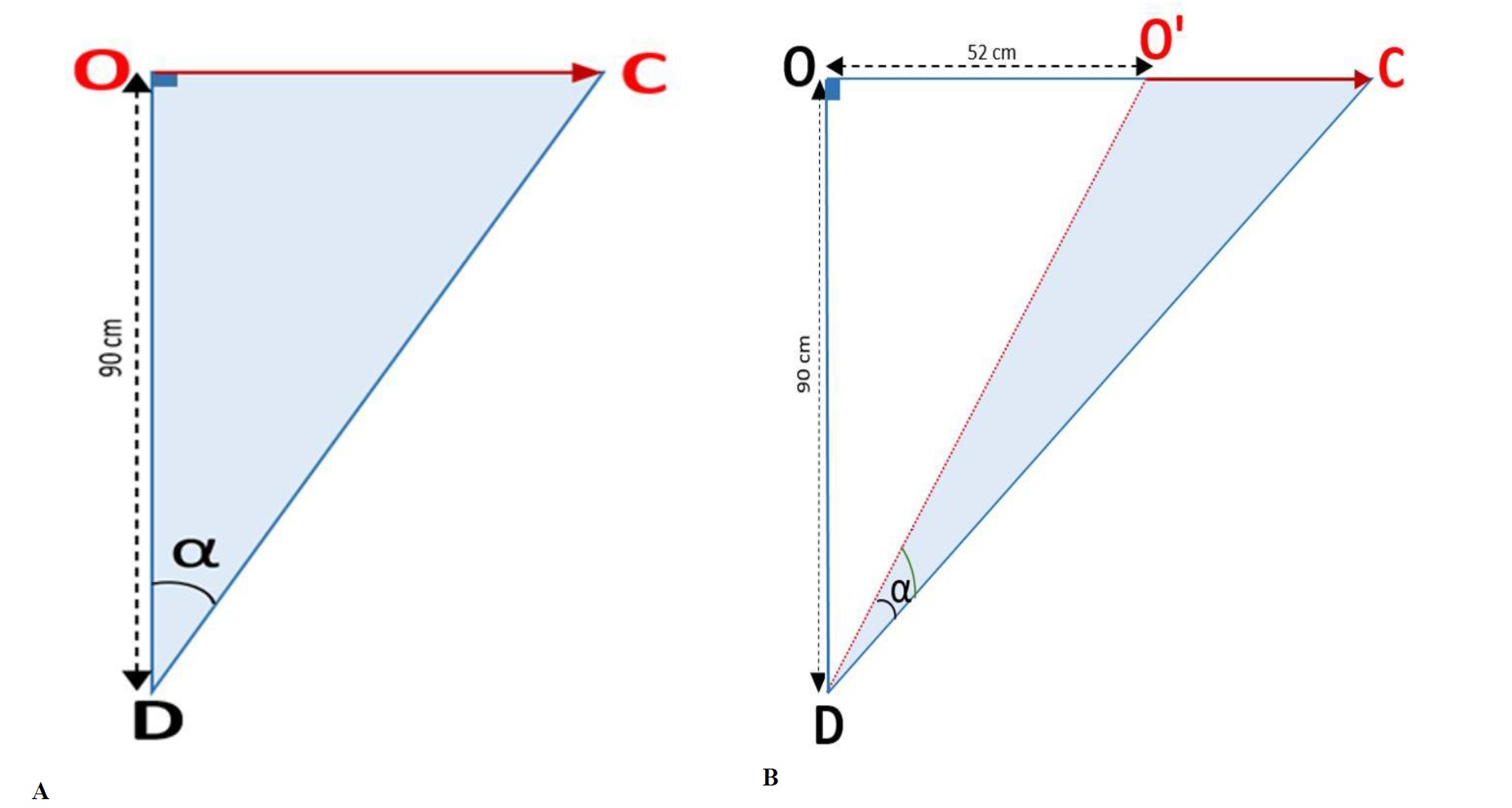
Figure 3. Target head position(D = patient, O = Center of target in neutral position, C = Spotlight in NHP test, O’ = Center of moved target, C’ = Spotlight in THP test, α = Repositioning error angle)
Following Hang's study [ 28 ], a horizontal shift of 52 cm—corresponding to approximately 30° of head rotation—was applied to the target on the horizontal plane, both to the right and left, for the second test (Fig. 2B). Participants were instructed to rotate their heads until the laser point aligned with the shifted target's center (O') and to memorize this position for several seconds. Then, starting from the neutral position, participants attempted to return the head to the memorized position while blindfolded. The displacement between the target center and the participant-indicated position (O'C) was measured in centimeters.
To convert this distance to degrees (α), the following formula was applied: .
As illustrated in Fig. 3B, ODrepresents the distance from the participant’s eyes to the target, while OO′denotes the distance between the circle center and the initial laser alignment point (O'). Measurements were taken for both leftward and rightward head rotations. The mean of these measurements provided the neck joint repositioning error (JPE) in degrees for each participant, serving as a quantitative indicator of cervical proprioception.
Repositioning Error
Cervical joint repositioning error (JPE) was reported using two metrics: Absolute Error (AE), which is the average of the absolute deviation from the target position regardless of direction, and Constant Error (CE), which accounts for the direction of the deviation from the target [ 28 ].
Pain
Pain intensity was measured using the Visual Analog Scale (VAS), ranging from 0 to 100 [ 29 ], where 0 indicates no pain, and 100 represents the worst imaginable pain. The VAS is widely validated and considered highly reliable for repeated pain assessments [ 30 , 31 ].
Range of Motion
Cervical range of motion (RoM) was assessed using a bubble inclinometer (Bubble Inclinometer, USA), a method previously demonstrated to be reliable for evaluating cervical mobility by Piva et al. [ 32 ]. Flexion and extension were measured with participants seated upright, with the inclinometer positioned on the head in alignment with the sagittal plane. In the same seated posture, lateral flexion was assessed by placing the device in the frontal plane. For rotational RoM, participants were positioned supine, and the inclinometer was placed perpendicular to the forehead along the transverse plane, following established measurement procedures [ 33 ].
Interventions
All participants received conventional physiotherapy combined with Mulligan’s mobilization. In addition, kinesio taping was applied exclusively to individuals in the experimental group.
Conventional Physiotherapy
The conventional physiotherapy program consisted of three components: transcutaneous electrical nerve stimulation (TENS), therapeutic ultrasound, and prescribed exercises [ 34 ]. First, participants underwent 20 minutes of conventional TENS (Enraf-Nonius, Netherlands) delivered at 80 Hz and a pulse width of <150 µs, with electrodes positioned bilaterally on the cervical region [ 35 ]. Subsequently, therapeutic ultrasound (Enraf-Nonius, Netherlands) was applied for 5 minutes at a frequency of 1 MHz and an intensity of 1.5 W/cm², administered in pulsed mode with a 50% duty cycle [ 36 ]. Finally, participants performed isometric cervical strengthening exercises in six directions. Each exercise consisted of 20 repetitions with a 6-second hold, performed at maximal voluntary isometric contraction [ 37 ].
Mulligan’s Mobilization
Sustained Natural Apophyseal Glides (SNAGs) are a mobilization technique combining passive spinal mobilization with the patient’s active movement. For SNAGs applied to the C3–C7 vertebrae, the patient remained seated in an upright, weight-bearing position. The therapist positioned the medial (inside) edge of the right thumb against the spinous or transverse process of the target vertebra. In contrast, the lateral (outside) edge of the left thumb was placed over the right thumb to reinforce the contact. Patients were then instructed to move their necks in the intended direction actively. At the same time, the therapist applied a sustained mobilization force parallel to the plane of the facet joints in an anterior-superior direction. Each movement was repeated 10 times for each vertebral level and movement plane [ 20 ].
Kinesio Taping
Uncut Kinesio tape manufactured in Korea, in purple and cream, was used in this study. The taping protocol was adapted from the methodology described by Saavedra-Hernández et al. [ 38 ]. All applications were performed with participants seated comfortably.
A Y-shaped strip was first applied along the cervical extensor muscles from the insertion to the origin. The base of the tape was lightly adhered over the upper thoracic region (T1–T2) while the patient maintained a neutral head and neck position. Participants were then asked to rotate and laterally flex the head to the opposite side, after which the tape was applied along the neck with approximately 15–25% tension to target the paraspinal musculature. The terminal ends of the tape were anchored over the occipital region without tension, with the head returned to a neutral position.
A second layer consisted of an I-shaped strip with a web-cut design, applied perpendicular to the initial Y- strip and covering the mid-cervical region (C3–C6). The central segment of this tape was placed with 10– 20% tension, while both ends were affixed without tension and with the neck maintained in a neutral posture (Fig. 4)
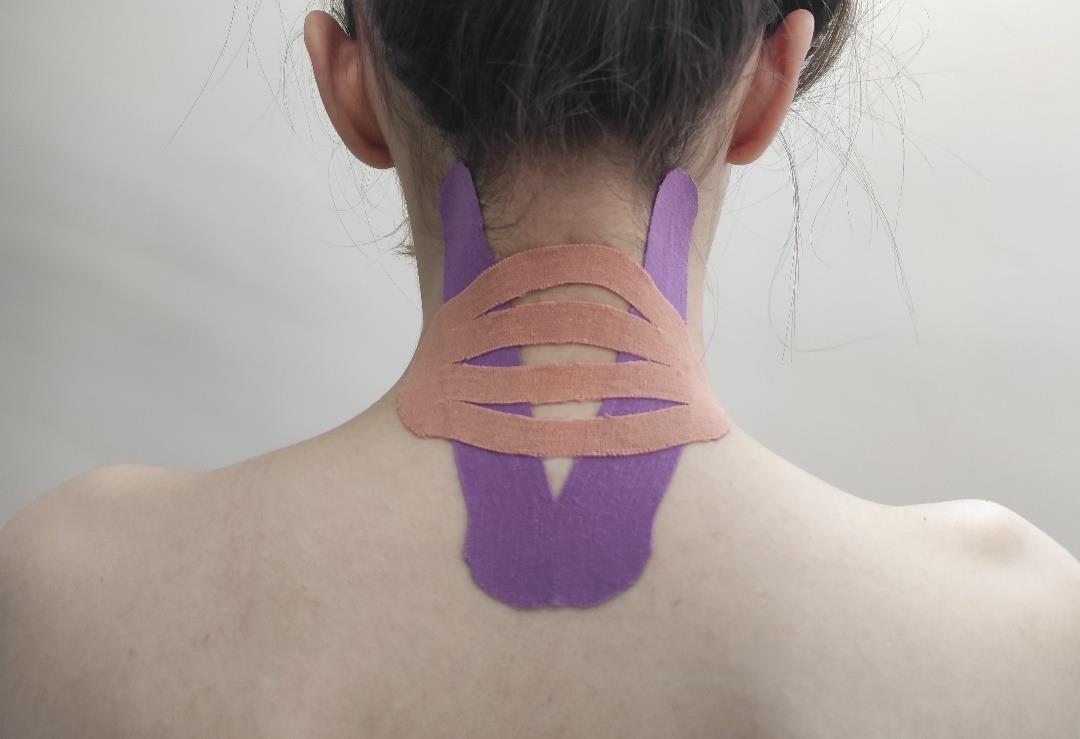
Figure 4.Application of Kinesio Tape
Statistical Analysis
Statistical analyses were performed using SPSS version 22. The Kolmogorov–Smirnov test was used to assess the normality of data distribution. Demographic variables were compared between groups using the independent t-test and Fisher’s exact test.
For within-group analyses, normally distributed variables were examined using paired t-tests, while the Wilcoxon signed-rank test was applied to non-normally distributed data. Between-group comparisons were conducted using independent t-tests for normally distributed outcomes and the Mann–Whitney U test for non-normally distributed outcomes.
A significance level of p < 0.05 was adopted for all statistical tests. Effect sizes were calculated to determine the magnitude of changes: Cohen’s d (0.2 = small, 0.5 = medium, 0.8 = large) for parametric tests, and the rank-biserial correlation r (0.1 = small, 0.3 = medium, 0.5 = large) for non-parametric tests.
Results
After excluding participants, data from 24 individuals were analyzed before and immediately after the intervention. Table 1 summarizes the demographic characteristics of participants in both groups. Independent t-tests showed no significant differences between groups for these variables (p > 0.05). Likewise, Fisher’s exact test indicated no significant difference in sex distribution (p > 0.99).
Most outcome variables were normally distributed (p > 0.05). Exceptions included VAS scores (p = 0.01), neck extension (p = 0.008), right lateral flexion (p = 0.02), and left rotation range of motion (RoM) (p = 0.05) in the control group, as well as left lateral flexion RoM (p < 0.001) and the absolute repositioning error when targeting left rotation (p = 0.02) in both groups.
Within the experimental group, significant reductions in pain were observed (paired t-test, p < 0.001), accompanied by significant improvements in flexion and left rotation (paired t-test, p < 0.05) and in left lateral flexion RoM (Wilcoxon signed-rank test, p = 0.01) following the intervention (Table 2). Similarly, the control group showed significant decreases in pain and improvements in extension and right lateral flexion RoM (Wilcoxon signed-rank test, p < 0.05). No other within-group changes were statistically significant.
| Experiment Group (n = 12) | Control Group (n = 12) | Pb | Esc | Power | ||
|---|---|---|---|---|---|---|
| Pain intensity (0-100) | Before | 55.41 ± 10.96 | 57.91 ± 11.17 | |||
| After | 38.33 ± 9.61 | 47.91 ± 15.87 | ||||
| M.Da | -17.8 ± 10.31 | -10 ± 13.72 | 0.1 | 0.64 | 0.32 | |
| P | < 0.001* | 0.017* | ||||
| ES | 1.66 | 0.73 | ||||
| Power | 0.97 | 0.41 | ||||
| Flexion RoM (degrees) | Before | 47.08 ±10.54 | 55 ± 10.66 | |||
| After | 52.08 ± 8.1 | 58.33 ± 12.67 | ||||
| M.D | 5 ± 9.4 | 3.33 ± 11.71 | 0.56 | 0.16 | 0.06 | |
| P | 0.03* | 0.12 | ||||
| ES | 0.53 | 0.28 | ||||
| Power | 0.24 | 0.1 | ||||
| Extension RoM (degrees) | Before | 62.5 ± 13.22 | 59.58 ± 5.82 | |||
| After | 66.25 ± 8.29 | 67.5 ± 8.39 | ||||
| M.D | 3.75 ± 11.03 | 7.91 ± 7.22 | 0.22 | 0.45 | 0.18 | |
| P | 0.31 | 0.006* | ||||
| ES | 0.34 | 1.1 | ||||
| Power | 0.12 | 0.73 | ||||
| RightlateralflexionRoM (degrees) | Before | 40 ± 9.04 | 46.5 ± 9.03 | |||
| After | 45.41 ± 6.2 | 55.41 ± 2.57 | ||||
| M.D | 5.41 ± 7.75 | 8.91 ± 6.64 | 0.35 | 0.49 | 0.21 | |
| P | 0.071 | 0.003* | ||||
| ES | 0.7 | 1.34 | ||||
| Power | 0.37 | 0.86 | ||||
| Left lateral flexion RoM (degrees) | Before | 71.25 ± 14.47 | 74.58 ± 13.22 | |||
| After | 76.25 ± 11.1 | 75 ± 15.22 | ||||
| M.D | 5 ± 12.9 | 0.41 ± 14.26 | 0.09 | 0.34 | 0.13 | |
| P | 0.015* | 0.058 | ||||
| ES | 0.39 | 0.03 | ||||
| Power | 0.15 | 0.05 | ||||
| Right rotation RoM (degrees) | Before | 67.91 ± 12.69 | 70.83 ± 10.4 | |||
| After | 71.25 ± 11.7 | 72.91 ± 14.37 | ||||
| M.D | 3.33 ± 12.21 | 2.08 ± 12.54 | 0.79 | 0.1 | 0.05 | |
| P | 0.13 | 0.29 | ||||
| ES | 0.27 | 0.17 | ||||
| Power | 0.09 | 0.06 | ||||
| Left rotation RoM (degrees) | Before | 71.25 ± 14.47 | 74.58 ± 13.22 | |||
| After | 76.25 ± 11.10 | 75 ± 15.22 | ||||
| M.D | 5 ± 12.9 | 0.41 ± 14.26 | 0.19 | 0.34 | 0.13 | |
| P | 0.06 | 0.56 | ||||
| ES | 0.39 | 0.03 | ||||
| Power | 0.15 | 0.07 | ||||
| Abbreviation: | ||||||
| RoM = range of motion | ||||||
| a = mean difference | ||||||
| b = P-value | ||||||
| c = effect size | ||||||
| * = significant difference | ||||||
| Bold number = measured with non-parametric tests | ||||||
Table 2 presents the comparative analysis between the two study groups. Based on the Independent t-test and Mann–Whitney U test results assessing mean changes from pre- to post-intervention, no statistically significant differences were observed between the groups (p > 0.05).
Figure 5 illustrates the cervical repositioning error outcomes for both groups at two time points—before and after the intervention. As shown in Figure 5 (Chart A), the experimental group demonstrated a significant reduction in absolute repositioning error in the neutral head position (NHP) during left rotation and during repositioning to the target head position (THP) on the left side. In contrast, the control group showed no meaningful changes, with repositioning errors remaining statistically unchanged between baseline and post-intervention measurements.
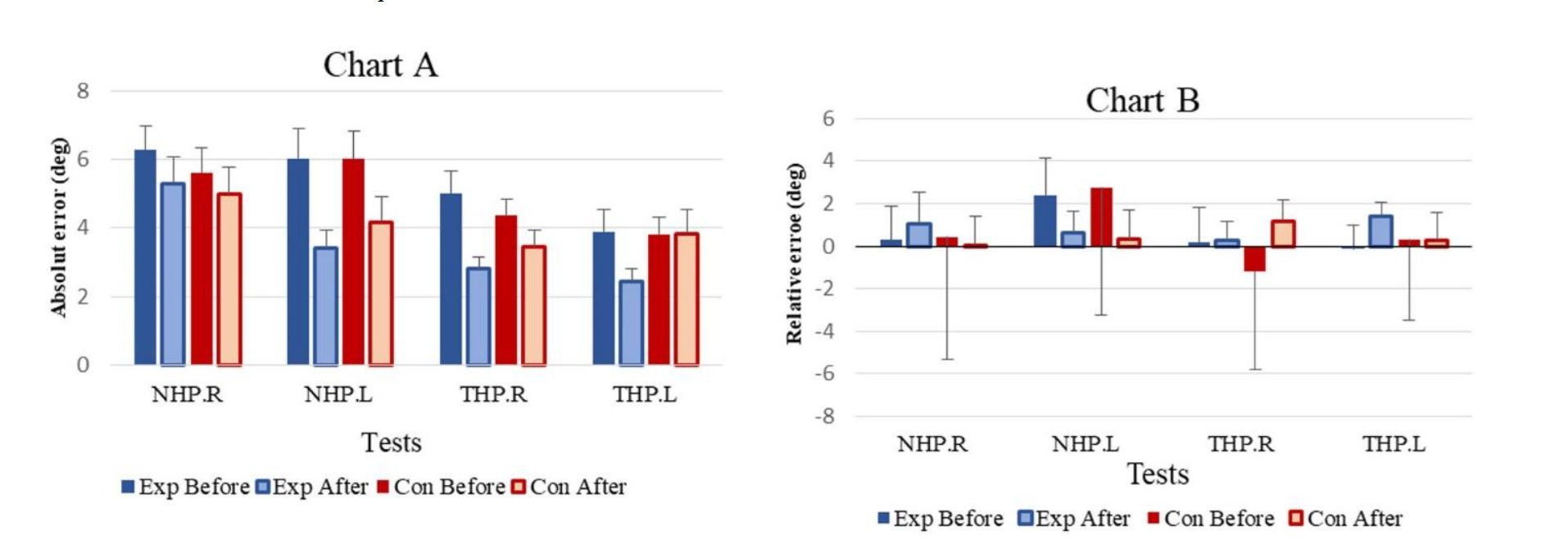
Figure 5. Relative error Mean ± SEM (standard error of the mean)NHP. R = repositioning the neutral head position from the right rotation test NHP. L = repositioning the neutral head position from the left rotation test THP. R = repositioning the target to the right from the neutral head position test THP. L = repositioning the target to the left from the neutral head position test* = significant difference
Regarding relative errors (Fig. 5, Chart B), no significant changes were observed over time in either group. Additionally, between-group comparisons revealed no statistically significant differences in the mean change in relative repositioning error.
Discussion
This study examined whether applying kinesio taping immediately after cervical Mulligan mobilization would yield additional benefits in pain reduction, cervical range of motion, and proprioceptive accuracy compared with Mulligan mobilization alone. The results demonstrated that both interventions—Mulligan mobilization with kinesio taping and mobilization alone—produced immediate reductions in pain intensity. Improvements in cervical range of motion were also observed in several directions in both groups. Although absolute repositioning error decreased following the intervention in both groups, the improvement was more pronounced in the experimental group that received Kinesio taping.
Consistent with prior research demonstrating the analgesic effects of kinesio taping in musculoskeletal disorders [ 39 ], the present study observed a substantial reduction in pain intensity within the experimental group, accompanied by a large effect size. This improvement may be attributed to enhanced cervical mobility, reduced muscle tension, and increased soft- tissue flexibility. Additionally, Mulligan’s mobilization alone has been documented to alleviate pain by activating endogenous pain-inhibitory pathways and facilitating the release of neuromodulators such as serotonin and noradrenaline [ 40 ]. Supporting this mechanism, findings by Zemadaniz et al. (2018) showed that Mulligan concept techniques effectively reduced pain and improved functional status in individuals with cervical pain [ 41 ]. Their results suggest notable short- and mid-term benefits for patients with chronic mechanical neck pain, likely due to the restoration of normal joint kinematics and mechanoreceptor stimulation, which collectively help diminish muscle spasm and discomfort.
Improvements in cervical range of motion (RoM) were observed in all directions following the interventions in both groups, with significant gains in flexion and left lateral flexion in the experimental group, and in extension and right lateral flexion in the control group. Mulligan’s mobilization has previously been shown to enhance RoM by correcting facet joint positional faults and reducing muscle guarding [ 42 , 43 ]. Furthermore, similarly, Gong et al. (2013) reported significant pain relief and RoM improvements following Mulligan mobilization in patients with neck pain, corroborating the outcomes of the present study [ 44 ]. The increased flexion observed in the experimental group may be attributed to reduced tension in the cervical extensor muscles, potentially due to the inhibitory effects of Kinesio tape [ 45 ]. In addition, Kinesio tape may expand the pain-free RoM by stimulating afferent feedback and activating pain- inhibitory mechanisms [ 38 ].
Cervical joint position error (JPE) was assessed using active head repositioning to neutral or target positions, consistent with previous research [ 25 , 26 ]. Contrary to some studies reporting improvements in joint proprioception following Mulligan’s mobilization, our control group—receiving only Mulligan mobilization combined with conventional physiotherapy—did not demonstrate significant proprioceptive gains. Mulligan’s mobilization is hypothesized to enhance proprioception by activating mechanoreceptors through joint gliding and increasing muscle spindle sensitivity via gamma motor neuron pathways [ 46 ]. Additionally, improved facet joint mobility may reduce capsular pressure, further contributing to potential proprioceptive enhancements.
Gong (2013) [ 47 ] reported that increased cervical range of motion (RoM) resulting from manual interventions can enhance proprioceptive function. In line with this, the observed improvement in neck proprioception during leftward movements— specifically, the ability to reposition the head to neutral from full left rotation and to accurately locate a target at 30° left rotation—may be attributed to the augmented left-sided RoM in participants who received kinesio taping in combination with Mulligan’s mobilization.
Comparison of relative repositioning errors before and after treatment revealed no significant changes, suggesting that relative error may not be the most sensitive measure for detecting proprioceptive improvements in these patients. Nevertheless, the findings of this study highlight a promising clinical implication: combining Mulligan’s mobilization with kinesio taping yielded immediate benefits, including reduced pain, improved cervical range of motion, and, notably, measurable enhancements in neck proprioception.
This subtle improvement in proprioception highlights the potential of a more comprehensive approach to managing non-specific chronic neck pain. Clinicians can use this insight to provide interventions that not only alleviate pain and physical limitations but also enhance spatial awareness and motor control. Integrating these techniques enables holistic, patient- centered care, promoting better outcomes and advancing rehabilitation standards.
This study investigated only the immediate effects of combining conventional physiotherapy with Mulligan’s mobilization and kinesio taping. Future research is needed to evaluate the short- and long-term outcomes of these interventions. Additionally, given that many of the statistical tests in this study had low power, larger sample sizes in subsequent studies are recommended to validate and strengthen the findings.
Conclusion
The findings of this study highlight the immediate benefits of integrating Mulligan’s mobilization into conventional physiotherapy, particularly when combined with kinesio taping, in reducing pain and enhancing cervical range of motion. Furthermore, the concurrent application of these interventions appears to offer greater potential to improve cervical proprioception than Mulligan’s mobilization alone. To corroborate and extend these findings, further research is warranted, including studies assessing both short- and long-term outcomes in individuals with chronic non-specific neck pain.
Acknowledgments
We extend our gratitude to the patients who participated in this study and to the Research Deputy of Tehran University of Medical Sciences (TUMS) for their support.
Author Contributions
F.D., A.SH., and S.F. conceived and designed the study; methodology was developed by F.D., A.SH., K.M., and S.F.; F.D. carried out data collection; F.D., K.M., and S.F. performed data analysis and interpretation; all authors contributed to drafting the manuscript and approved the final version for publication.
Funding
This study is derived from the MSc. dissertation of the first author in the Department of Physical Therapy, School of Rehabilitation, Tehran University of Medical Sciences, Iran (Grant #1401-3-103-62667).
Conflict of Interest
The authors declare no potential conflicts of interest.
References
- Mokdad AH, Forouzanfar MH, Daoud F, Mokdad AA, El Bcheraoui C, Moradi-Lakeh M, et al. Danger ahead: the burden of diseases, injuries, and risk factors in the Eastern Mediterranean Region, 1990–2015. Int J Public Health. 2018; 63:11-23.
- Blanpied PR, Gross AR, Elliott JM, Devaney LL, Clewley D, Walton DM, et al. Neck pain: revision 2017: clinical practice guidelines linked to the international classification of functioning, disability and health from the orthopaedic section of the American Physical Therapy Association. J Orthop Sports Phys Ther. 2017; 47(7):A1-A83.
- Goode AP, Freburger J, Carey T. Prevalence, practice patterns, and evidence for chronic neck pain. Arthritis Care Res. 2010; 62(11):1594-601.
- Nederhand MJ, IJzerman MJ, Hermens HJ, Turk DC, Zilvold G. Predictive value of fear avoidance in developing chronic neck pain disability: consequences for clinical decision making. Arch Phys Med Rehabil. 2004; 85(3):496-501.
- Kahlaee AH, Ghamkhar L, Nourbakhsh MR, Arab AM. Strength and range of motion in the contralateral side to pain and pain- free regions in unilateral chronic nonspecific neck pain patients. Am J Phys Med Rehabil. 2020; 99(2):133-41.
- Peng B, Yang L, Li Y, Liu T, Liu Y. Cervical proprioception impairment in neck pain-pathophysiology, clinical evaluation, and management: a narrative review. Pain Ther. 2021; 10:143- 64.
- Hillier S, Immink M, Thewlis D. Assessing proprioception: a systematic review of possibilities. Neurorehabil Neural Repair. 2015; 29(10):933-49.
- Riemann BL, Lephart SM. The sensorimotor system, part II: the role of proprioception in motor control and functional joint stability. J Athl Train. 2002; 37(1):80.
- Munn J, Sullivan SJ, Schneiders AG. Evidence of sensorimotor deficits in functional ankle instability: a systematic review with meta-analysis. J Sci Med Sport. 2010; 13(1):2-12.
- Hurley MV, Scott DL, Rees J, Newham DJ. Sensorimotor changes and functional performance in patients with knee osteoarthritis. Ann Rheum Dis. 1997; 56(11):641-8.
- Fyhr C, Gustavsson L, Wassinger C, Sole G. The effects of shoulder injury on kinaesthesia: a systematic review and meta- analysis. Man Ther. 2015; 20(1):28-37.
- Mazaheri M, Abichandani D, Kingma I, Treleaven J, Falla D. A meta-analysis and systematic review of changes in joint position sense and static standing balance in patients with whiplash- associated disorder. PLoS One. 2021; 16(4):e0249659.
- Tong MH, Mousavi SJ, Kiers H, Ferreira P, Refshauge K, van Dieën J. Is there a relationship between lumbar proprioception and low back pain? A systematic review with meta-analysis. Arch Phys Med Rehabil. 2017; 98(1):120-36.
- Proske U, Schaible H-G, Schmidt R. Joint receptors and kinaesthesia. Exp Brain Res. 1988; 72(2):219-24.
- de Zoete RM, Osmotherly PG, Rivett DA, Farrell SF, Snodgrass SJ. Sensorimotor control in individuals with idiopathic neck pain and healthy individuals: a systematic review and meta-analysis. Arch phys Med Rehabil. 2017; 98(6):1257-71.
- de Vries J, Ischebeck B, Voogt L, Van Der Geest J, Janssen M, Frens M, et al. Joint position sense error in people with neck pain: a systematic review. Man Ther. 2015; 20(6):736-44.
- Verhagen AP. Physiotherapy management of neck pain. J Physiother. 2021; 67(1):5-11.
- Coulter ID, Crawford C, Vernon H, Hurwitz EL, Khorsan R, Booth MS, et al. Manipulation and mobilization for treating chronic nonspecific neck pain: a systematic review and meta- analysis for an appropriateness panel. Pain physician. 2019; 22(2):E55.
- Fernández-de-las-Peñas C, Alonso-Blanco H, Palacios-Ceña FJ, Garrido-Marín DM, Cleland JA, Fuensalida-Novo S. The effectiveness of manual therapy for neck pain: a systematic review and meta-analysis. Musculoskeletal Sci Pract. 2018; 33:58-67.
- Mulligan BR. Manual Therapy:" NAGs"," SNAGs"," MWMs" etc. 6th ed. Orthopedic Physical Therapy & Rehabilitation ; 2004.
- Shereen AA, Eid MA, Elsoudany AM, Mostafa W, Alshehri MA, Alshahrani F. The immediate effects of Mulligan mobilization with movement technique in patients with neck pain: A systematic review and meta-analysis. J Bodyw Mov Ther. 2017; 21(4):950-8.
- Falla DL, Jull GA, Hodges PW. Patients with neck pain demonstrate reduced electromyographic activity of the deep cervical flexor muscles during performance of the craniocervical flexion test. Spine. 2004; 29(19):2108-14.
- Alahmari KA, Reddy RS, Tedla JS, Samuel PS, Kakaraparthi VN, Rengaramanujam K, et al. The effect of Kinesio taping on cervical proprioception in athletes with mechanical neck pain—a placebo-controlled trial. BMC Musculoskelet Disord. 2020; 21(1):1-9.
- Erdoğanoğlu Y, Bayraklı B. Short-term changes in chronic neck pain after the use of elastic adhesive tape. J Chiropr Med. 2021; 20(2):70-6.
- Revel M, Andre-Deshays C, Minguet M. Cervicocephalic kinesthetic sensibility in patients with cervical pain. Arch Phys Med Rehabil. 1991; 72(5):288-91.
- Roren A, Mayoux-Benhamou M-A, Fayad F, Poiraudeau S, Lantz D, Revel M. Comparison of visual and ultrasound based techniques to measure head repositioning in healthy and neck- pain subjects. Man Ther. 2009; 14(3):270-7.
- Hill R, Jensen P, Baardsen T, Kulvik K, Jull G, Treleaven J. Head repositioning accuracy to neutral: a comparative study of error calculation. Man Ther. 2009; 14(1):110-4.
- Pinsault N, Vuillerme N, Pavan P. Cervicocephalic relocation test to the neutral head position: assessment in bilateral labyrinthine-defective and chronic, nontraumatic neck pain patients. Arch Phys Med Rehabil. 2008; 89(12):2375-8.
- Bodian CA, Freedman G, Hossain S, Eisenkraft JB, Beilin Y. The visual analog scale for pain: clinical significance in postoperative patients. Anesthesiology. 2001; 95(6):1356-61.
- Carlsson AM. Assessment of chronic pain. I. Aspects of the reliability and validity of the visual analogue scale. Pain. 1983; 16(1):87-101.
- Bijur PE, Silver W, Gallagher EJ. Reliability of the visual analog scale for measurement of acute pain. Acad Emerg Med. 2001; 8(12):1153-7.
- Piva SR, Erhard RE, Childs JD, Browder DA. Inter-tester reliability of passive intervertebral and active movements of the cervical spine. Man Ther. 2006; 11(4):321-30.
- de Koning CH, van den Heuvel SP, Staal JB, Smits-Engelsman BC, Hendriks EJ. Clinimetric evaluation of active range of motion measures in patients with non-specific neck pain: a systematic review. Eur Spine J. 2008; 17:905-21.
- Buyukturan O, Buyukturan B, Sas S, Karartı C, Ceylan I. The effect of mulligan mobilization technique in older adults with neck pain: A randomized controlled, double-blind study. Pain Res Manag. 2018; 2018
- Bedwell C, Dowswell T, Neilson JP, Lavender T. The use of transcutaneous electrical nerve stimulation (TENS) for pain relief in labour: a review of the evidence. Midwifery. 2011; 27(5):e141-e8.
- van der Windt DA, van der Heijden GJ, van den Berg SG, Ter Riet G, de Winter AF, Bouter LM. Ultrasound therapy for musculoskeletal disorders: a systematic review. Pain. 1999; 81(3):257-71.
- Zronek M, Sanker H, Newcomb J, Donaldson M. The influence of home exercise programs for patients with non-specific or specific neck pain: a systematic review of the literature. J Man Manip Ther. 2016; 24(2):62-73.
- Saavedra-Hernández M, Castro-Sánchez AM, Arroyo-Morales M, Cleland JA, Lara-Palomo IC, Fernandez-De-Las-Penas C. Short-term effects of kinesio taping versus cervical thrust manipulation in patients with mechanical neck pain: a randomized clinical trial. J Orthop Sports Phys Ther. 2012; 42(8):724-30.
- Artioli DP, Bertolini GRF. Kinesio taping: application and results on pain: systematic review. Fisioter Pesqui. 2014; 21:94- 9.
- Schmid A, Brunner F, Wright A, Bachmann LM. Paradigm shift in manual therapy? Evidence for a central nervous system component in the response to passive cervical joint mobilisation. Man Ther. 2008; 13(5):387-96.
- Zemadanis K. The short and mid-term effects of Mulligan concept in patients with chronic mechanical neck pain. J Novel Physiother Rehabil. 2018; 2:022-35.
- Buyukturan O, Buyukturan B, Sas S, Karartı C, Ceylan I. The Effect of Mulligan Mobilization Technique in Older Adults with Neck Pain: A Randomized Controlled, Double‐Blind Study. Pain Res Manag. 2018; 2018(1):2856375.
- Vicenzino B, Paungmali A, Teys P. Mulligan's mobilization- with-movement, positional faults and pain relief: current concepts from a critical review of literature. Man Ther. 2007; 12(2):98-108.
- Harsulkar SG, Khatri SM, Rao K, Iyer C. Effectiveness of gong’s mobilization in cervical spondylosis: A prospective comparative study. Int J Community Med Public Health. 2015; 2(1):38-44.
- Copurgensli C, Gur G, Tunay VB. A comparison of the effects of Mulligan's mobilization and Kinesio taping on pain, range of motion, muscle strength, and neck disability in patients with cervical spondylosis: A randomized controlled study. J Back Musculoskeletal Rehabil. 2017; 30(1):51-62.
- Bush KW, Collins N, Portman L, Tillett N. Validity and intertester reliability of cervical range of motion using inclinometer measurements. J Man Manip Ther. 2000; 8(2):52- 61.
- Gong W. Effects of cervical joint manipulation on joint position sense of normal adults. J Phys Ther Sci. 2013; 25(6):721-3.


