
Introduction
Spinal cord injury (SCI) is a medically complex, relatively infrequent, yet highly burdensome and life- altering health condition [ 1 , 2 ]. It is considered one of the most devastating events that can disrupt nearly every aspect of an individual’s life [ 3 ]. SCI results in severe neurological impairments that lead to significant physical limitations and adversely affect mental health, socioeconomic status, and overall quality of life (QOL) [ 4 ]. In recent years, rehabilitation research has increasingly focused on the socioeconomic circumstances, community reintegration, and life satisfaction of individuals with SCI following their discharge from rehabilitation centers [ 5 ].
Bangladesh has reported a notably high incidence of SCI, largely resulting from workplace injuries, road traffic accidents, and falls from height [ 6 ]. SCI remains a major public health concern in many low- and middle-income countries (LMICs), including Bangladesh [ 7 ]. Across Bangladesh and other Asian countries, spinal cord injuries continue to be a leading cause of long-term disability [ 8 ]. Consequently, SCI often pushes affected individuals and their families into substantial economic hardship, a pattern widely observed in Bangladesh and other LMICs [ 9 ].
Community participation is a critical component of the overall rehabilitation process, particularly for individuals with traumatic SCI, who are often healthy, working-age adults with active social and family roles [ 10 ]. In rehabilitation research, social integration has become an increasingly prominent concept over the past three decades [ 11 ]. After returning to their communities, SCI survivors encounter numerous factors that influence their quality of life (QOL) and socioeconomic well-being [ 12 ]. Inadequate community engagement and low levels of social participation remain significant challenges for individuals living with SCI [ 13 ]. At the same time, expectations regarding the active community involvement of people with disabilities are steadily increasing [ 14 ]. Consequently, promoting community integration has become a central objective in the rehabilitation of individuals with SCI [ 15 ].
Life satisfaction refers to the extent to which individuals hold favorable perceptions and feelings about their overall life circumstances [ 16 ]. In many developing countries, life satisfaction has been largely overlooked as an outcome measure in rehabilitation medicine for individuals with SCI [ 17 ]. Although research findings are mixed, greater community participation has been associated with improved life satisfaction in some studies [ 18 ]. Nevertheless, many individuals with SCI continue to encounter substantial challenges that negatively affect their well-being and overall level of life satisfaction [ 19 ].
The Centre for the Rehabilitation of the Paralysed (CRP) in Bangladesh is a renowned non-governmental organization that provides comprehensive economic, psychological, and physical rehabilitation services for individuals with SCI. As one of the largest acute SCI care providers in South Asia, CRP admits approximately 410 patients annually. The center emphasizes the importance of successful community reintegration following discharge and conducts regular home follow-up visits to assess reintegration outcomes [ 20 ]. The present study aimed to investigate the level of life satisfaction and the socioeconomic status of individuals with SCI living in community settings after their discharge from a rehabilitation center in Bangladesh.
Methods
Data for this cross-sectional study were obtained from the spinal cord injury database of the Spinal Cord Injury Development Association of Bangladesh (SCIDAB). Individuals with SCI who were living in the community and had been discharged from the Centre for the Rehabilitation of the Paralysed (CRP) after completing their rehabilitation were selected as participants. Community participation was assessed using the World Health Organization Disability Assessment Schedule (WHODAS 2.0), while life satisfaction was measured using the Life Satisfaction Questionnaire-11 (LISAT-11). All data were collected through telephone surveys conducted between February and June 2023.
Due to the limited mobility of many participants, telephone interviews were considered the most feasible and effective method for data collection. Participation in the study was entirely voluntary. No follow-up calls were made if a participant did not respond to the initial contact attempt. Calls continued until data from all 150 participants were obtained. At the beginning of each interview, informed consent was obtained verbally, and participants were reminded of their right to decline any question or to withdraw from the interview at any time without providing a reason. A trained researcher explained the study’s objectives in detail, and all interviews were conducted in Bengali, the primary language spoken by the vast majority of Bangladeshis.
The WHODAS 2.0 comprises six domains: mobility, cognition, self-care, life activities, getting along, and participation. In the present study, only the participation domain—consisting of eight items—was administered. This domain assesses social engagement, including involvement in community activities, barriers and challenges to interaction, and issues related to maintaining personal dignity [ 21 ]. Each item is rated according to the level of difficulty experienced, using five response categories: none, mild, moderate, severe, and extreme. Responses are then scored using a standardized algorithm that applies differential weights to items and severity levels to generate a composite score. The WHODAS 2.0 yields an overall score ranging from 0 to 100, where 0 indicates no disability and 100 indicates complete disability. The instrument evaluates participation restrictions and activity limitations experienced over the preceding 30 days [ 22 ].
The LISAT-11 assesses an individual’s level of satisfaction across various life domains. It consists of ten domain-specific items in addition to one global item evaluating satisfaction with “life as a whole.” The domains include relationships with friends, sexual life, daily activities, partner relationships, family life, and physical and mental health. Each of the eleven items is rated on a six-point ordinal scale ranging from 1 (“extremely dissatisfied”) to 6 (“very satisfied”), with higher scores indicating greater life satisfaction. Notably, the developers of the instrument recommend against calculating a total sum score for the scale [ 23 ].
The survey included a series of demographic (age and gender) and socioeconomic (education level, monthly income, and marital status) questions, along with items related to the cause and duration of injury. The WHODAS 2.0 and LISAT-11 questionnaires, both translated into Bengali, were used in this study, and permission to use the translated versions was obtained from the respective instrument developers. Data were collected across all eight divisional regions of Bangladesh between May and September 2023. Ethical approval for the study was granted by the Institutional Review Board (IRB) on June 1, 2023 (BPA- IPRR/IRB/992/07/2023/615).
A total of 150 individuals with SCI completed the survey. Table 1 summarizes the participants’ clinical and demographic characteristics. Participants’ ages ranged from 18 to 60 years, with a median age of 32. Most respondents were male (n = 135, 90%), and 50% were married. The largest proportion of participants (40.7%) had received primary education. Prior to injury, 31 participants (20%) were farmers, 27 (18%) were businessmen, 27 (18%) were service holders, and 9 (6%) were unemployed. Traumatic SCI was reported in 84% of participants, with the remaining 16% having non-traumatic SCI. Paraplegia was observed in 97 participants (64.7%) and tetraplegia in 53 participants (35.3%). The majority of participants lived in rural areas (n = 111, 74%), and 107 participants (71.3%) had sustained their injury for more than five years. Data were collected from all eight divisional areas of Bangladesh, with the highest representation from Dhaka (41.3%) and the lowest from Rangpur (4%). Nearly half of the participants (46.7%) reported no monthly income, while 38% earned less than 10,000 BDT (≈ USD 85) per month.
| Demographic | % (n) | Demographic | %(n) | Clinical Characteristics | %(n) |
|---|---|---|---|---|---|
| Age | Educational Status | Cause of Injury | |||
| Median = 32 | Illiterate | 28% (42) | Traumatic | 84% (126) | |
| 15-25 year | 27.3% (41) | Primary | 40.7% (61) | Non-traumatic | 16% (24) |
| 26-35 year | 34% (51) | Secondary | 20% (30) | Injury Duration | |
| 36-45 year | 24.7% (37) | Higher Secondary | 5.3% (8) | 5 years duration | 71.3% (107) |
| 46-55 year | 10.7% (16) | Graduate | 6% (9) | >5 years duration | 28.7% (43) |
| 56-65 year | 3.3% (5) | ||||
| Gender | Residential Area | Type of paralysis | |||
| Male | 90% (135) | Urban | 26% (39) | Paraplegic | 64.7% (97) |
| Female | 10% (15) | Rural | 74% (111) | Tetraplegic | 35.3% (53) |
| Marital Status | Monthly Income (BDT) | Injury Severity | |||
| Single | 36% (54) | No income | 46.7% (70) | Complete paraplegia | 25.3% (38) |
| Married | 50% (76) | < 10000 | 38% (57) | Incomplete paraplegia | 39.3% (59) |
| Divorced | 4.7% (7) | 11000-20000 | 12% (18) | Complete tetraplegia | 11.3% (17) |
| Separated | 8.7% (13) | 21000-30000 | 3.3% (5) | Incomplete tetraplegia | 24.0% (36) |
| Divisional Area | Occupation | WHODAS 2.0 | |||
| Dhaka | 41.3% (47) | Service holder | 18% (27) | mean±SD | 15.04±6 |
| Rajshahi | 10% (15) | Housewife | 6.7% (10) | LISAT-11 | |
| Rangpur | 4% (6) | Students | 11.3% (17) | mean±SD | 37.35±9.4 |
| Khulna | 15.3% (23) | Farmer | 20.8% (31) | ||
| Barisal | 8.7% (13) | Business | 18% (27) | ||
| Chattogram | 12.7% (19) | Day laborer | 19% (29) | ||
| Sylhet | 9.3% (14) | Unemployed | 6% (9) | ||
| Mymensingh | 8.7% (13) | ||||
| Abbreviation: BDT: Bangladeshi Taka | |||||
The LISAT-11 results indicated that a notable proportion of SCI respondents reported satisfaction with their overall quality of life (30.67%), family life (28.67%), and psychological health (26%). In contrast, lower satisfaction levels were reported for leisure activities (1.3%), financial situation (4%), vocational situation (6.7%), ability to perform daily tasks (11.3%), sexual life (12%), partnership relationships (11.33%), and contact with friends (9.3%) (Table 2).
| LISAT-11 items (n=150) | Median (Q1–Q3) | Proportion satisfied %(n) |
|---|---|---|
| Life as a whole | 4 (3–5) | 30.67 (46) |
| Vocational situation | 3 (3–4) | 6.7 (10) |
| Financial situation | 3 (2–4) | 4 (6) |
| Leisure | 3 (3–4) | 1.3 (12) |
| Contact with friends | 3 (3–4) | 9.3 (14) |
| Sexual life | 4 (3–5) | 12 (18) |
| LISAT-11 items (n=150) | Median (Q1–Q3) | Proportion satisfied %(n) |
| Activities of daily living | 3 (3–4) | 11.3 (17) |
| Family life | 3 (3–4) | 28.67 (43) |
| Partnership/relationship | 3 (2–4) | 11.33 (17) |
| Physical health | 3 (2–4) | 12 (18) |
| Psychological health | 3 (3–5) | 26 (39) |
| *Satisfaction is measured as a score of 5 or 6 on the 1–6 scale; Q1 and Q3 = quartiles 1 and 3. | ||
Among the 97 paraplegic and 53 tetraplegic participants (n = 150), the majority reported having no monthly income, while 38% earned less than 10,000 BDT (approximately USD 85) per month, placing them in the lowest two income categories. Only a small proportion of participants earned more than 21,000 BDT per month. Multivariable linear regression analysis identified five independent variables, of which two were statistically significant and together explained 30.5% of the variance in life satisfaction (LISAT-11). The two strongest predictors, based on the standardized regression coefficient (β), were injury severity (β = -0.323, P = 0.050) and monthly income (β= 0.426, P < 0.001) (Table 3).
| Independent variablesa | Unstandardized coefficient B (95% CI) | Standardized coefficient β | P-value | R square |
|---|---|---|---|---|
| Type of paralysis | 1.714 | .087 | .602 | |
| Residential area | -1.976 | -.092 | .205 | 30.5% |
| Monthly income | 5.032 | .426 | .000 | |
| Marital status | -1.094 | -.099 | .176 | |
| Injury severity | -2.780 | -.323 | .050 | |
| aThe following five independent variables were included: Types of paralysis, Residential area, Monthly income, Marital status, Injury severity. | ||||
Figure 1 illustrates that, regarding community participation (WHODAS 2.0), the largest proportion of participants (43.68%) exhibited a moderate level of disability. Only 7.91% reported no participation-related difficulties. Across the eight domains, most participants experienced mild disability in maintaining personal dignity (29.30%), while the highest proportion exhibited moderate disability in managing time spent on health conditions (52%). Severe (21.30%) and extreme (10.7%) restrictions were reported when attempting to engage in community activities. Correlation analysis between WHODAS 2.0 and LISAT-11 revealed a strong negative association (rp = -0.852, p = 0.001), indicating that higher levels of disability were associated with lower life satisfaction.
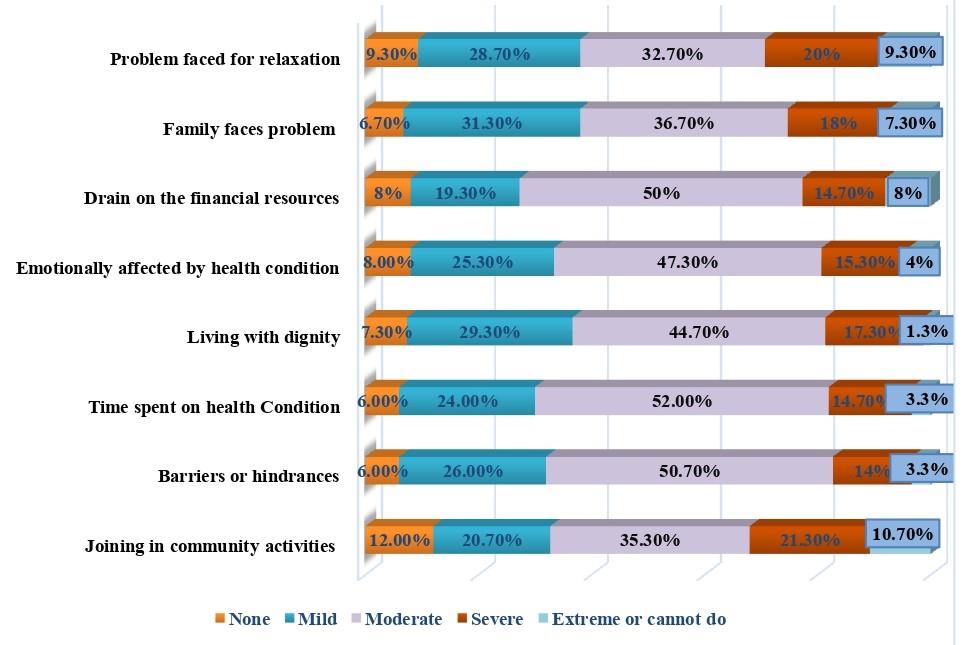
Figure 1. Social participation of the participants in accordance with the World Health Organization Disability Assessment Schedule (WHODAS 2.0)
Discussion
This study investigated the life satisfaction and socioeconomic status of 150 individuals with SCI, highlighting their demographic characteristics and the barriers they face in various aspects of life. The gender distribution (90% male, 10% female) reflects a well- documented trend in SCI epidemiology, often linked to higher exposure to risky behaviors and occupational hazards among men [ 24 ]. The median age of 32 years indicates that most participants were in the prime of their lives, frequently sustaining injuries from accidents, sports, or work-related incidents [ 25 ]. This demographic profile underscores the critical importance of injury prevention and the necessity of a holistic approach to supporting young adults with SCI throughout the rehabilitation process. In Bangladesh, as in other developing nations, the majority of respondents were young men with paraplegia, often engaged in manual labor and higher-risk occupations, reflecting their increased exposure to environmental hazards [ 26 ].
There is a clear intersectionality in the education and socioeconomic profiles of the respondents, which highlights the cumulative challenges they face while living with SCI. It is notable that a majority of participants, who were mostly illiterate or had only primary education, came from diverse backgrounds yet were predominantly engaged in physically demanding occupations such as farming and day labor. This observation underscores the socioeconomic disparities among individuals with SCI and emphasizes the need for interventions to remove barriers to education and employment, thereby improving quality of life in this community [ 27 , 28 ]. Furthermore, the spatial distribution of participants across multiple subdivisions of the country highlights the importance of ensuring equitable access to healthcare services, regardless of geographic location [ 28 ].
The assessment of life satisfaction using the LISAT-11 questionnaire provided valuable insights into the personal well-being of individuals with SCI. The findings revealed notable disparities in satisfaction levels: while many participants reported contentment with aspects such as overall quality of life (30.67%), family life, and psychological health, lower satisfaction was observed in areas such as leisure, financial situation, and vocational circumstances [ 29 ]. A similar study in Bangladesh reported significant satisfaction among SCI individuals regarding family life, communication with friends, recreational activities, ability to manage daily tasks, and spouse relationships [ 1 ]. One key factor contributing to these outcomes is the continued long-term care provided by family members, which remains crucial in the effective management of post-injury challenges, particularly in a developing country like Bangladesh [ 30 ].
These findings support the multidimensional nature of life satisfaction among individuals with SCI, which is influenced by factors such as physical function, social engagement, and economic status. Correlational analysis between LISAT-11 and WHODAS 2.0 revealed a negative association between life satisfaction and disability level, highlighting the impact of SCI on overall quality of life [ 28 , 31 ]. Similarly, another study reported a significant positive correlation (ρ = 0.49, p = 0.00) between life satisfaction scores and total community integration scores, demonstrating that greater participation in community activities is linked to higher life satisfaction [ 1 ].
The results of the multivariable linear regression analysis indicated that monthly income and injury severity were significant predictors of life satisfaction among individuals with spinal cord injuries. These findings underscore the importance of addressing social inequalities and providing comprehensive rehabilitation services to enhance life satisfaction [ 28 ]. Furthermore, multiple linear regression analyses in related studies have demonstrated significant correlations between life satisfaction, community integration, and various demographic, socioeconomic, and health-related factors [ 1 ].
This study highlights the importance of life satisfaction and socioeconomic status as critical health outcome indicators that affect multiple aspects of the lives of individuals with SCI. Following SCI, life adjustment is influenced by a range of external factors as well as the rehabilitation programs received. It is crucial for caregivers and rehabilitation professionals to identify and prioritize the factors they can most effectively address. Both governmental and non- governmental organizations should develop strategies to create accessible, disability-friendly employment opportunities for individuals with SCI. Resuming education, securing employment, and participating in social activities are particularly challenging without accessible public transportation. Moreover, access to assistive technologies, especially mobility aids, can substantially enhance functional independence and should be designed with consideration of rural settings and the living conditions prevalent in Bangladesh.
Participation restrictions in environmental and social contexts, arising from physical challenges, are common complications for individuals with spinal cord injuries. This study emphasizes the need to address the specific requirements of this population. Key issues include ensuring accessible environments and developing community-based care management models. Consequently, there is a need to prioritize community- centered rehabilitation strategies to reduce disability, enhance quality of life, and ultimately improve life satisfaction. Additionally, efforts should be made to provide suitable employment opportunities for individuals who sustain severe spinal cord injuries in Bangladesh.
This study examined the socioeconomic status and life satisfaction of individuals with spinal cord injuries (SCI) living in Bangladeshi communities, a context often underrepresented in global literature. Unlike high-income countries, where SCI care and rehabilitation are supported by advanced infrastructure, this research highlights the challenges faced in a low- resource setting. Using WHODAS 2.0 and LISAT-11, the study identified monthly income and injury severity as key predictors of life satisfaction. These findings contribute to the literature by demonstrating how economic and social integration factors interact to influence life satisfaction in individuals with SCI, particularly in resource-limited environments.
Although this study provides valuable insights into the demographic characteristics, life satisfaction, and social participation of individuals with SCI, several limitations should be acknowledged. First, the cross- sectional and quantitative design limits the ability to infer causal relationships. Second, the relatively small sample size may affect the generalizability of the findings. Third, although participants were recruited from both rural and urban areas, the sample was not proportionally balanced, and no comparative analysis between regions or across different settings was performed.
For future research, longitudinal studies are recommended to monitor changes in life satisfaction and socioeconomic conditions over time. Incorporating qualitative approaches could provide deeper insights into personal experiences, challenges, and coping mechanisms, allowing for more targeted interventions. Comparative studies between urban and rural populations, as well as cross-country analyses in low- and middle-income settings, could illuminate regional differences. Furthermore, examining the role of family and societal support in enhancing life satisfaction may informculturallysensitiverehabilitationand community reintegration strategies.
Conclusion
This study highlights the substantial challenges faced by individuals with SCI in Bangladesh after reintegration into the community, including economic hardships, restricted participation, and reduced life satisfaction. While a significant proportion of participants reported satisfaction with family life and psychological health, satisfaction with leisure, financial circumstances, and vocational situations remained notably low. Monthly income and injury severity were identified as the strongest predictors of life satisfaction, emphasizing the complex interplay between socioeconomic status and disability outcomes.
Practical implications of these findings include the urgent need for policy interventions to enhance economic opportunities and educational access for individuals with SCI, particularly in rural areas. Rehabilitation programs should incorporate community-based initiatives that address psychological support, assistive technologies, and mobility aids to improve social participation and quality of life. Furthermore, the development of affordable and accessible assistive devices, alongside disability- friendly public infrastructure, could reduce participation restrictions and enhance daily functioning for this population.
Acknowledgements
The authors gratefully acknowledge the Spinal Cord Injury Development Association of Bangladesh (SCIDAB) and the Centre for the Rehabilitation of the Paralysed (CRP) for their support in facilitating telephone interviews and data collection.
Data Availability Statement
Data supporting the findings of this study are available from the corresponding author upon reasonable request.
Funding Information
This research was conducted entirely using the authors’ personal resources.
Disclosure Statement
The authors declare no conflicts of interest.
References
- Ahmed N, Quadir MM, Rahman MA, Alamgir H. Community integration and life satisfaction among individuals with spinal cord injury living in the community after receiving institutional care in Bangladesh. Disabil Rehabil. 2018; 40(9):1033-40.
- Burns AS, O’Connell C. The challenge of spinal cord injury care in the developing world. J Spinal Cord Med. 2012; 35:3-8.
- Moghimian M, Kashani F, Cheraghi MA, Mohammadnejad E. Quality of life and related factors among people with spinal cord injuries in Tehran, Iran. Arch Trauma Res. 2015; 4(3)
- Saadat S, Javadi M, Divshali BS, Tavakoli AH, Ghodsi SM, Montazeri A, et al. Health-related quality of life among individuals with long-standing spinal cord injury: a comparative study of veterans and non-veterans. BMC Public Health. 2010; 10:1-7.
- Burleigh SA, Farber RS, Gillard M. Community Integration and life satisfaction after traumatic brain injury: long-term findings. Am J Occup Ther. 1998; 52:45-52.
- Rahimi-Movaghar V, Sayyah MK, Akbari H, Khorramirouz R, Rasouli MR, Moradi-Lakeh M, et al. Epidemiology of traumatic spinal cord injury in developing countries: a systematic review. Neuroepidemiology. 2013; 41:65-85.
- Ullah MM, Sarker A, Chowdhury SK. Assessment for returning to work after spinal cord injuries and patient's vocational preferences. Work. 2015; 50(3):387-93.
- Islam MS, Hafez MA, Akter M. Characterization of spinal cord lesion in patients attending a specialized rehabilitation center in Bangladesh. Spinal Cord. 2011; 49(7):783-6.
- Lee BB, Cripps RA, Fitzharris M, Wing PC. The global map for traumatic spinal cord injury epidemiology: update 2011, global incidence rate. Spinal Cord. 2014; 52(2):110-6.
- Sekaran P, Vijayakumari F, Hariharan R, Zachariah K, Joseph SE, Senthil Kumar RK. Community reintegration of spinal cord- injured patients in rural south India. Spinal Cord. 2010; 48:628-632.
- Burleigh SA, Farber RS, Gillard M. Community Integration and life satisfaction after traumatic brain injury: long-term findings. Am J Occup Ther. 1998; 52:45-52.
- Cox RJ, Amsters DI, Pershouse KJ. The need for a multidisciplinary outreach service for people with spinal cord injuryliving in the community. Clin Rehabil. 2001; 15:600-606.
- Craig A, Nicholson Perry K, Guest R, Tran Y, Middleton J. Adjustment following chronic spinal cord injury: Determining factors that contribute to social participation. Br J Health Psychol. 2015; 20:807-823.
- Barclay L, Robins L, Migliorini C, Lalor A. Community integration programs and interventions for people with spinal cord injury: a scoping review. Disabil Rehabil. 2021; 43(26):3845-55.
- Kratz AL, Chadd E, Jensen MP, Kehn M, Kroll T. An examination of the psychometric properties of the community integration questionnaire (CIQ) in spinal cord injury. J Spinal Cord Med. 2015; 38:446-455.
- Fuhrer MJ. Subjectifying quality of life as a medical rehabilitation outcome. Disabil Rehabil. 2000; 22(11):481-9.
- Post MW, de Witte LP, van Asbeck FW, van Dijk AJ, Schrijvers AJ. Predictors of health status and life satisfaction in spinal cord injury. Arch Phys Med Rehabil. 1998; 79(4):395-401.
- Burleigh SA, Farber RS, Gillard M. Community integration and life satisfaction after traumatic brain injury: Long-term findings. Am J Occup Ther. 1998; 52(1):45-52.
- Santino N, Larocca V, Hitzig SL, Guilcher SJ, Craven BC, Bassett-Gunter RL. Physical activity and life satisfaction among individuals with spinal cord injury: Exploring loneliness as a possible mediator. J Spinal Cord Med. 2022; 45(2):173-9.
- Centre for the Rehabilitation of the Paralysed. Annual Report 14/15.2016:09.
- Silveira C, Souza RT, Costa ML, Parpinelli MA, Pacagnella RC, Ferreira EC, et al. Validation of the WHO Disability Assessment Schedule (WHODAS 2.0) 12‐item tool against the 36‐item version for measuring functioning and disability associated with pregnancy and history of severe maternal morbidity. Int J Gynecol Obstet. 2018; 141:39-47.
- Üstün TB, Chatterji S, Kostanjsek N, Rehm J, Kennedy C, Epping-Jordan J, et al. Developing the World Health Organization Disability Assessment Schedule 2. Bull World Health Organ 2010; 88:815-823.
- Ekstrand E, Lexell J, Brogardh C. Test-retest reliability of the Life Satisfaction Questionnaire (LiSat-11) and association between items in individuals with chronic stroke. J Rehabil Med. 2018; 50(8):713-8.
- Center SL. Facts and figures at a glance. Birmingham, AL: University of Alabama at Birmingham. 2016; 10
- Wyndaele M, Wyndaele JJ. Incidence, prevalence and epidemiology of spinal cord injury: what learns a worldwide literature survey? Spinal Cord. 2006; 44(9):523-9.
- Rahimi-Movaghar V, Sayyah MK, Akbari H, Khorramirouz R, Rasouli MR, Moradi-Lakeh M, et al. Epidemiology of traumatic spinal cord injury in developing countries: a systematic review. Neuroepidemiology. 2013; 41:65-85.
- Niu SP, Zhang YJ, Han N, Yin XF, Zhang DY, Kou YH. Identification of four differentially expressed genes associated with acute and chronic spinal cord injury based on bioinformatics data. Neural Regeneration Research. 2021 May 1; 16(5):865-70.
- Krause JS, Carter RE, Pickelsimer E. Behavioral risk factors of mortality after spinal cord injury. Arch Phys Med Rehabil. 2009; 90(1):95-101.
- Post MW, van Leeuwen CM. Psychosocial issues in spinal cord injury: a review. Spinal Cord. 2012; 50(5):382-9.
- Hossain MS, Harvey LA, Rahman MA, Muldoon S, Bowden JL, Islam MS, et al. Community-based InterVentions to prevent serIous Complications (CIVIC) following spinal cord injury in Bangladesh: protocol of a randomized controlled trial. BMJ Open. 2016; 6:e010350.
- World Health Organization. World health statistics 2010. World Health Organization; 2010 May 10.

