
Introduction
Occupations with high physical activity demands— such as those of police officers and military personnel—requireperformingcomplex, unpredictable, and physically strenuous tasks. These individuals routinely perform activities that depend on muscular endurance and strength, speed, agility, and flexibility to complete their missions [ 1 ]. In occupations where optimal functional performance is essential, musculoskeletal injuries and pain are more common, highlighting the critical need for effective preventive and therapeutic strategies [ 1 ]. Military personnel, in particular, face occupational hazards that elevate their risk of injury or illness, with back, neck, and knee pain being among the most prevalent complaints. Such injuries often lead to psychological distress and diminished quality of life [ 2 ].
Evidence supports the high burden of musculoskeletal injuries in military populations. In one national study of 1,820 officer cadets, 74% of injuries involved the lower extremities. Among naval officers, back pain (38%), knee pain (13%), and wrist pain (7%) were the most frequently reported musculoskeletal problems [ 3 ]. Furthermore, Zarei et al. documented injury rates ranging from 6 to 12 injuries per 100 personnel per month [ 4 ]. These conditions not only generate substantial direct costs related to diagnosis and treatment but also impose high indirect costs, including increased absenteeism, reduced productivity, and higher rates of job attrition. As a result, the economic, social, and security implications for military organizations become considerably more severe [ 5 , 6 ].
Research suggests that the use of functional movement assessments and screening tests during recruitment or training can help identify and prevent many musculoskeletal injuries [ 7 ]. The first step in injury prevention is detecting neuromuscular movement impairments that increase an individual’s risk of injury. The second step involves minimizing this risk through targeted, effective training interventions that address these deficiencies. For decades, organizations have relied on physical fitness tests to reduce injury incidence [ 8 ]; however, over the past 20 years, assessment strategies have shifted from traditional fitness evaluations toward more functional approaches. Recently, the Functional Movement Screen (FMS) has gained prominence as a tool for identifying individuals at heightened risk of injury. The FMS comprises seven fundamental movement patterns that require coordinated mobility and stability, thus enabling the detection of potential movement dysfunctions [ 9 ].
High FMS scores reflect adequate musculoskeletal stability and efficient movement patterns, which contribute to improved motor performance and a lower risk of physical injuries. In contrast, low FMS scores indicate underlying movement dysfunctions that elevate the likelihood of injury [ 10 ]. One of the primary strategies for improving FMS scores is therapeutic exercise, widely recognized as an effective approach to reducing pain, enhancing joint range of motion, and improving overall quality of life [ 11 ].
Research on the impact of corrective exercises on skeletal disorders among soldiers in Tehran has shown that these exercises can significantly reduce musculoskeletal problems among military personnel. Based on these findings, the authors recommended addressing postural deviations and integrating corrective exercises into service members' morning routines [ 12 ]. Likewise, another study examined the effects of an eight-week traditional corrective exercise program on Functional Movement Screen (FMS) performance. The results showed that although the traditional exercises significantly improved certain FMS components—such as the hurdle step, in-line lunge, and trunk stability push-up—they were less effective in enhancing deep squat and shoulder mobility scores [ 13 ].
The National Academy of Sports Medicine (NASM) has recently introduced a corrective exercise protocol structured into four sequential phases: inhibition, stretching, activation, and integration [ 14 ]. According to this model, rather than relying solely on stretching to address tight or shortened muscles, it is more effective first to apply inhibitory techniques to reduce tension, followed by targeted stretching. The activation phase subsequently focuses on re-educating or enhancing the activation of underactive muscles. Finally, the integration phase employs progressive functional movements designed to retrain coordinated, synergistic muscle function through dynamic, multi-joint exercises [ 14 ].
Given the points outlined above, musculoskeletal injuries are highly prevalent among military personnel and substantially affect their psychological and social well-being. The FMS test is currently regarded as one of the most effective tools for assessing functional performance, as it evaluates fundamental to advanced movement patterns essential for operational readiness. Among the most comprehensive training approaches for improving and treating musculoskeletal abnormalities is the NASM corrective exercise system, which provides a structured framework for designing targeted interventions and implementing a cohesive corrective strategy. Previous research has demonstrated that this method is more effective than traditional exercise programs and has recently gained increasing attention in Iran, with studies conducted among athletes, students, and various professional groups, including firefighters . Accordingly, the present study aims to investigate the effects of selected American Sports Medicine exercises on functional performance (FMS), pain levels, and quality of life among military students.
Methods
This study employed a classical experimental design. Initially, Functional Movement Screening (FMS) tests were administered to 100 students from Khatam al- Anbia Air Defense University, aged 19–21 years. Based on the inclusion criteria, 40 students were selected as the study sample. Ethical approval for this research was obtained from the Ethics Committee of the Islamic Azad University, Isfahan Branch (IR.IAU.KHUISF.RREC.1399.297).
The inclusion criteria were: 1) FMS scores below 17, 2) absence of medical contraindications, and 3) absence of ethical restrictions. The exclusion criteria consisted of: 1) unwillingness to continue participation, 2) absence for more than one session, and 3) incomplete post-test assessments.
All participants completed informed consent forms before enrollment. Participants were stratified by baseline pain score into the experimental group (n = 20) or the control group (n = 20). Baseline assessments included the Visual Analog Scale (VAS) for pain and the WHOQOL-BREF Quality-of-Life Questionnaire.
The experimental group performed National Academy of Sports Medicine (NASM) corrective exercises for 8 weeks, three sessions per week, with each session lasting 1 hour. The control group continued their routine daily activities without receiving any intervention. After the eight-week intervention period, all tests and questionnaires were re-administered.
A standardized Functional Movement Screening (FMS) kit was used to assess movement quality. The kit consisted of a 56-inch board (43 inches marked), measuring 6 inches wide and 2 inches high; one long, marked rod (48 inches); two shorts, marked rods (25 inches each); an elastic band; and standardized scoring forms (Figure 1).
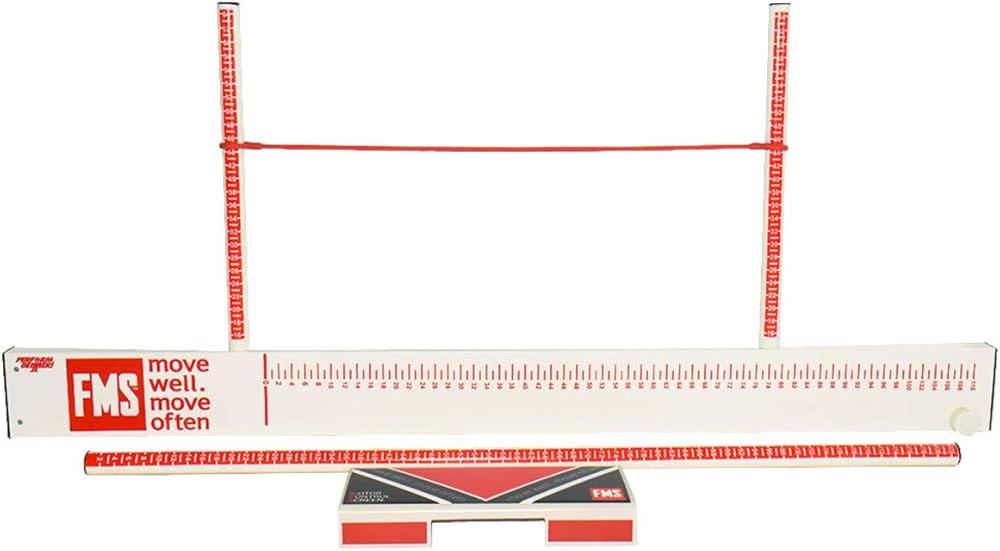
Figure 1. FMS Kit
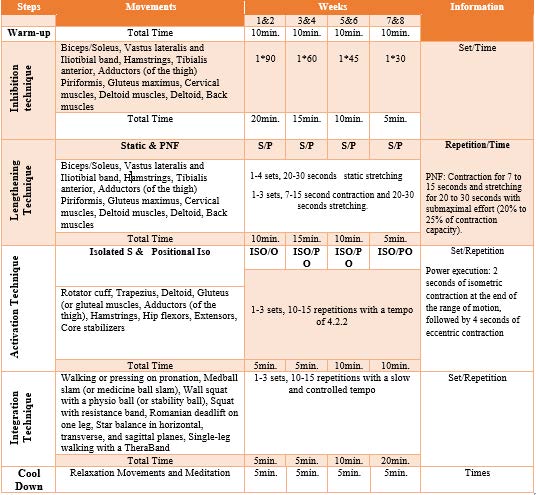
Figure 2. Training Program
The FMS includes seven fundamental movement tests: deep squat, hurdle step, in-line lunge, shoulder mobility, active straight-leg raise, trunk stability push- up, and rotary stability. Each test was scored according to the established four-point scale: movement performed correctly without compensation received a score of 3; movement completed with compensation received a score of 2; inability to perform the movement received a score of 1; and pain during the movement received a score of 0.
Scores from all components yielded a total possible score ranging from 0 to 21. In addition, three clearance tests (shoulder mobility, trunk stability push-up, and rotary stability) were administered; a positive clearance test automatically resulted in a score of 0 for that specific component [ 16 ].
The FMS has demonstrated strong psychometric properties. For example, Saki et al. reported high intra- rater reliability (96%) and acceptable inter-rater reliability (78%) with a 95% confidence interval, confirming the tool’s suitability for research and clinical use [ 17 ].
Pain intensity was assessed using the Visual Analog Scale (VAS), one of the most reliable and straightforward tools for evaluating subjective pain levels and widely recognized for its ease of comprehension by participants [ 18 ]. The instrument consisted of a marked 10-cm ruler representing a continuum of pain intensity from 0 to 10, on which participants indicated the point that best reflected the extent to which pain limited their joint function and movement. Higher scores indicate greater pain and functional restriction. A score of 0 signifies no pain, 1– 3 indicates mild pain, 4–6 represents moderate pain, and 7–10 reflects severe pain. The internal reliability of the VAS has been reported to range between 0.77 and 0.79 [ 18 ].
Quality of life was evaluated using the Persian version of the WHO Quality of Life-BREF (WHOQOL-BREF), comprising 26 items across four domains. According to the WHO Quality of Life Group report from 15 international centers, the instrument demonstrates acceptable reliability, with Cronbach’s alpha coefficients ranging from 0.73 to 0.89 across its subscales and total score [ 20 ].
The exercise program was conducted over eight weeks, with three one-hour sessions per week. Each session comprised three components: warm-up, main training, and cool-down. The warm-up phase lasted 10 minutes and included 3 minutes of light jogging, followed by 7 minutes of basic shoulder mobility exercises (pendulum and rotational movements). The main training phase lasted 45 minutes and consisted of four stages —inhibition, lengthening, activation, and integration. During the initial weeks, greater emphasis was placed on the inhibition and lengthening techniques; however, as participants progressed and demonstrated improved readiness, the focus gradually shifted toward activation and integration techniques [ 14 ]. The cool-down phase lasted 5 minutes and involved light walking and relaxation exercises [ 21 ].
Data collected from the study variables were analyzed using SPSS version 22. Both descriptive and inferential statistical methods were applied, with a significance level of 0.05. The effects of the exercise intervention were evaluated using a mixed-model ANOVA.
Results
Table 1 presents the demographic characteristics of the study participants. The normality of the data distribution was confirmed using the Kolmogorov– Smirnov test.
| Group | N | Age (years) | Height (cm) | Weight (kg) | BMI (kg.m-2) |
|---|---|---|---|---|---|
| Control | 20 | 20.2 ± 0.1 | 186.9 ± 8.4 | 80 ± 7.7 | 22.9 ± 1.4 |
| Experimental | 20 | 20.0 ± 0.5 | 183 ± 8.8 | 82.1 ± 10.3 | 24.1 ± 2.3 |
The mixed-model ANOVA showed a significant main effect of time on Functional Movement Screening (FMS) scores (P = 0.001, F(1,18) = 39.76). A significant time × group interaction was also observed (P = 0.001, F(1,18) = 52.41), indicating that changes in FMS performance differed between groups. Specifically, FMS scores increased in the post-test for the experimental group, whereas no meaningful changes occurred in the control group.
For pain assessed using the Visual Analog Scale (VAS), the main effect of time was significant (P = 0.027, F(1,18) = 5.76), and the time × group interaction was also significant (P = 0.001, F(1,18) = 17.64). These results indicate that pain levels changed differently between groups, with post-test VAS scores decreasing in the experimental group and remaining unchanged in the control group.
Quality-of-life scores (WHOQOL-BREF) also showed a significant main effect of time (P = 0.008, F(1,18) = 8.77) and a significant time × group interaction (P = 0.01, F(1,18) = 8.33). Participants in the experimental group demonstrated improved quality-of-life scores at post-test, whereas no changes were observed in the control group (Table 2).
| Test | Source | Sumof Squares | df | Mean Square | F | Significance | PartialEta Squared (η²) |
|---|---|---|---|---|---|---|---|
| Functional Movement Screening | Main Effect of Time | 18.22 | 1 | 18.22 | 39.76 | 0.001 | 0.69 |
| Interaction Effect | 24.02 | 1 | 24.02 | 52.41 | 0.001 | 0.74 | |
| Error | 8.25 | 18 | 0.46 | ||||
| Visual Analog Scale (Pain) | Main Effect of Time | 6.40 | 1 | 6.40 | 5.76 | 0.027 | 0.24 |
| Interaction Effect | 19.60 | 1 | 19.60 | 17.64 | 0.001 | 0.49 | |
| Error | 20.00 | 18 | 1.11 | ||||
| Quality of Life | Main Effect of Time | 156.02 | 1 | 156.02 | 8.77 | 0.008 | 0.32 |
| Interaction Effect | 148.22 | 1 | 148.22 | 8.33 | 0.01 | 0.31 | |
| Error | 320.25 | 18 | 17.79 |
The line graphs in Figure 3 show that the slope of change in the experimental group is noticeably steeper than that of the control group, indicating greater improvement over the same period. From pre-test to post-test, the experimental group demonstrated a 19% increase in FMS scores, a 69% reduction in Visual Analog Scale (VAS) pain scores, and an 8% improvement in quality-of-life scores.
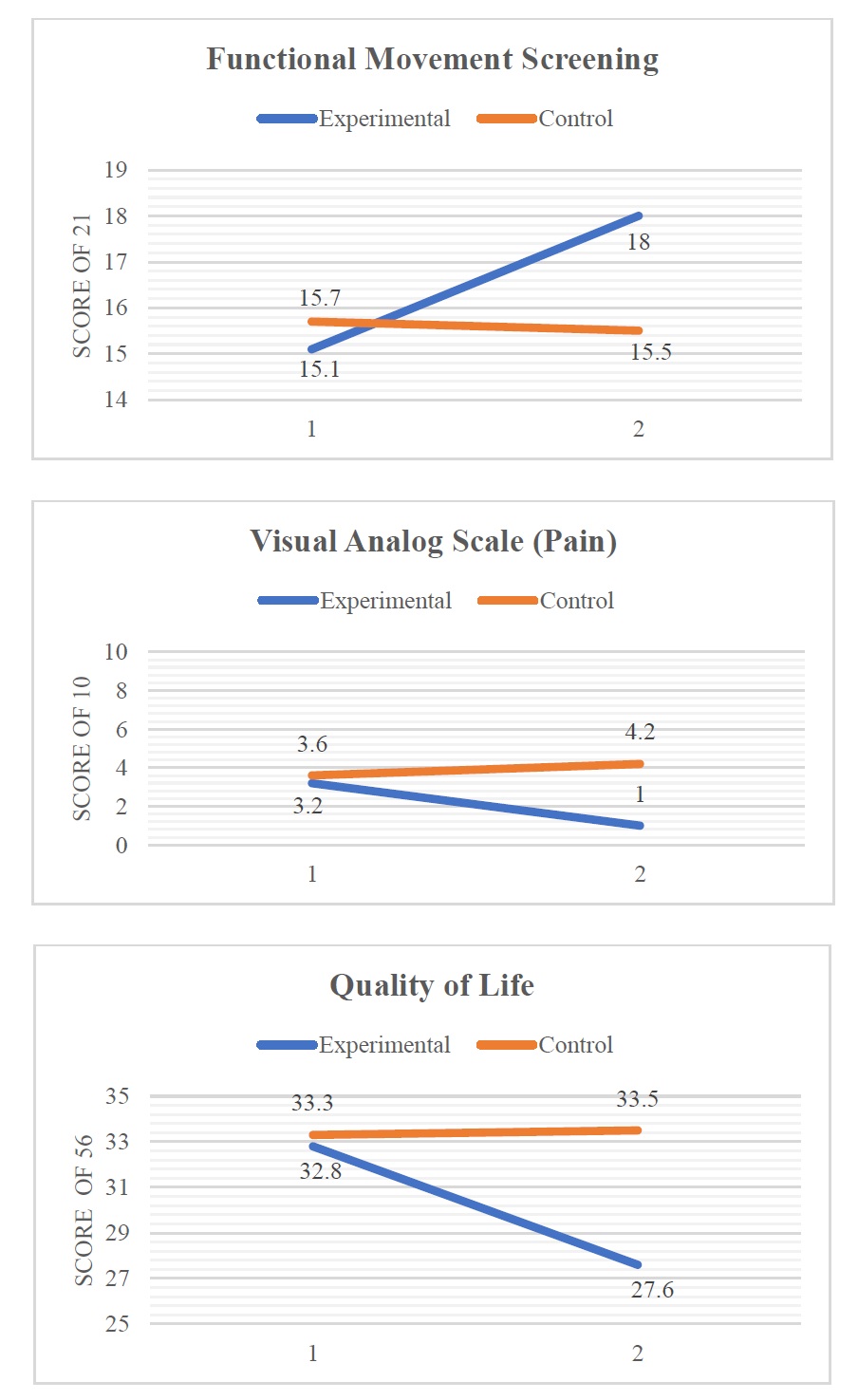
Figure 3. Line graph of the tests.
Discussion
The present study aimed to evaluate the effects of an eight-week American Sports Medicine (NASM) corrective exercise protocol on functional movement performance, pain levels, and quality of life among military students. The findings demonstrated that participation in this program resulted in significant improvements in functional test scores, reductions in pain, and enhancements in quality of life compared to the control group.
These results are consistent with previous research. For example, Bagherian et al. (2004) examined the effects of an eight-week corrective exercise program based on American Sports Medicine principles in students with functional ankle instability. They found significant improvements in functional movement performance [ 15 ]. Similarly, Peate et al. (2007) reported that implementing functional exercise programs in military personnel reduced injury-related recovery time by 62% and decreased overall injury incidence by 42% over 12 months [ 22 ].
Sharifi et al. (2019) investigated the effects of an eight-week American Sports Medicine (NASM) exercise program on shoulder functional performance in firefighters. Participants completed three one-hour sessions per week, and the results demonstrated significant improvements in functional test scores [ 8 ]. Similarly, Heidari et al. examined the impact of NASM corrective exercises on pain and quality of life in patients with diabetic neuropathy. Their findings indicated that a 12-week intervention effectively reduced pain and enhanced quality of life in this population [ 23 ].
The exercises in the present study were implemented according to the American Sports Medicine (NASM) protocols. Initially, myofascial techniques were applied to release micro-adhesions that form in damaged muscle tissue and to eliminate existing adhesions. This process improved tissue extensibility during subsequent stretching exercises and helped reduce pain [ 14 ]. Exercise further promotes the release of endorphins, which interact with the nervous system to alleviate pain. Endorphins enter the nerves, transmitting pain signals to the brain, and bind to pain- relieving receptors on neurons. These receptors function similarly to those targeted by drugs such as morphine. By acting on these receptors, endorphins prevent the release of neurotransmitters from nerve terminals, thereby blocking pain signals from reaching the brain. Consequently, endorphins act as a natural painkiller [ 24 ].
Following the myofascial release, stretching exercises were performed to enhance joint range of motion, increase tissue elasticity, improve neuromuscular efficiency, and optimize overall neuromuscular function. After stretching, activation and integration techniques were employed to increase force production, recruit motor units, and enhance the functional capacity of the movement system by improving neuromuscular control. The training program was designed to engage all four synergistic subsystems and incorporate all joints, particularly during the integration phase, which considered entire movement chains. Understanding these subsystems is critical when designing training programs, as it prevents isolated training of individual muscles. Moreover, the use of multi-joint and multi-planar exercises enhances the nervous system’s ability to recruit synergistic muscles, thereby improving coordination and overall movement efficiency [ 14 ].
American Sports Medicine exercises promote smoother movement patterns, improved limb coordination, balance, cognitive processing, and overall neuromuscular control [ 14 ]. In essence, these exercises enhance physical condition by increasing strength, flexibility, and balance, which, in turn, boost an individual’s self-efficacy in performing daily activities. Additionally, improved concentration contributes to greater success in executing everyday tasks. Consequently, by reducing pain and activity limitations, these exercises can enhance quality of life and foster a greater sense of well-being [ 14 ].
In contrast, Wright et al. (2015) examined the effectiveness of fundamental movement exercises on FMS scores and traditional tests such as plank, side plank, and sit-and-reach. They recruited 22 participants and divided them into a control group (engaging in comprehensive sports activities) and an experimental group (focusing on the quality of fundamental movements) based on FMS scores. The intervention consisted of four weekly 30-minute sessions. Their results indicated that the training program did not improve FMS scores [ 25 ]. The discrepancy between their findings and those of the present study may be due to the relatively short duration of Wright et al. program or to their heavy emphasis on movement quality, without incorporating essential biophysical factors, such as strength and endurance, necessary for optimal performance. In contrast, our study not only focused on correcting movement patterns but also targeted related factors, including stability, mobility, strength, and muscle power, which likely contributed to the observed improvements in FMS scores.
The American Sports Medicine exercises effectively reduced the activity of overactive tissues through inhibition and elongation techniques. Additionally, activation and integration techniques stimulated underactive tissues and enhanced the execution of functional movements.
Among the limitations of this study was the potential influence of military students’ participation in physical activity during practical classes, which may have affected the results. Students were instructed to minimize participation in these classes as much as possible. Another limitation was the lack of control over participants’ psychological states, which could have influenced quality-of-life outcomes. Future studies are recommended to include mental health assessment questionnaires. Furthermore, the study did not control for participants’ baseline physical fitness levels or prior exercise experience. Future research should consider using standardized tools to assess these factors.
Conclusion
Based on the findings, performing American Sports Medicine exercises can effectively enhance students’ physical and mental performance. Such improvements may reduce the risk of physical and mental injuries among military students. It is recommended that sports specialists in military universities adopt American Sports Medicine exercises to improve students’ readiness, increase efficiency, and reduce healthcare costs.
Acknowledgments
The authors would like to express their gratitude to all participants who contributed to this study.
Author Contributions
All authors contributed equally to the design, execution, and writing of this article.
Conflict of Interest
The authors declared no conflict of interest in this study.
References
- Rasteiro A, Santos V, Massuça LM. Physical training programs for tactical populations: brief systematic review. InHealthcare 2023 Mar 28 (Vol. 11, No. 7, p. 967). MDPI.
- Hauret KG, Jones BH, Bullock SH, Canham-Chervak M, Canada S. Musculoskeletal injuries: description of an under- recognized injury problem among military personnel. American journal of preventive medicine. 2010 Jan 1; 38(1): S61-70.
- Mohammadyari S, Aslani M, Zohrabi A. The effect of eight weeks of injury prevention program on performance and musculoskeletal pain in Imam Ali Military University students. Journal of military medicine. 2022 Oct 26; 23(5):444-55.
- Zarei M, Rahemi M. Military physical training-related injuries: A review of epidemiology and risk factor and prevention strategy studies.
- Schneider S, Lipinski S, Schiltenwolf M. Occupations associated with a high risk of self-reported back pain: representative outcomes of a back pain prevalence study in the Federal Republic of Germany. European spine journal. 2006 Jun; 15(6):821-33.
- Teyhen D, Bergeron MF, Deuster P, Baumgartner N, Beutler AI, de la Motte SJ, Jones BH, Lisman P, Padua DA, Pendergrass TL, Pyne SW. Consortium for health and military performance and American College of Sports Medicine Summit: utility of functional movement assessment in identifying musculoskeletal injury risk. Current sports medicine reports. 2014 Jan 1; 13(1):52-63.
- Reiman MP, Manske RC. Functional testing in human performance. Human kinetics; 2009.
- Sharifi A, Zolaktaf V. Effect of eight weeks of NASM exercises on shoulder functional tests. Journal for Research in Sport Rehabilitation. 2019 Aug 23; 7(13):125-33.
- Chorba RS, Chorba DJ, Bouillon LE, Overmyer CA, Landis JA. Use of a functional movement screening tool to determine injury risk in female collegiate athletes. North American journal of sports physical therapy: NAJSPT. 2010 Jun; 5(2):47.
- Johnson QR, Scraper J, Lockie R, Orr RM, Dawes JJ. Sex- related differences in functional movement screen scores among reserve officers’ training corps cadets. Military medicine. 2023 Jan 4; 188(1-2): e152-7.
- Sabaghi Kenari M, Hadadnezhad M, Karimi M. Effect of callisthenic exercises on shoulder range of motion, pain and quality of life on female breast cancer survivals. Iranian Journal of Breast Diseases. 2017 Mar 10; 9(4):60-70.
- Jafari Behrouz, Yuosef Pour Ahmad Reza, NAJI MORTEZA. The Effect of a Corrective Exercise Course on the Musculoskeletal Disorders of a Military Unit Soldiers. JOURNAL OF MILITARY MEDICINE[Internet]. 2020; 22(3):235-243.
- Rafiei AH, Ghasemi G, Shoaei M. The Effect of the Eight Weeks of Selected Exercises on the Scores of the Functional Movement Screen Test Among the Special Unit Staff of the Isfahan Police Force. Journal of Military Medicine. 2022 Oct 26; 24(2):1115-22.
- Clark. NASM essentials of corrective exercise training. Lippincott Williams and Wilkins; 2010 Sep 21.
- Bagherian S, Rahnama N, Wikstrom EA, Rostami F. P5 Effect of nasm corrective exercises on functional movement patterns, sensorimotor function, and fatigue in collegiate athletes with functional ankle instability.
- Cook G, Burton L, Hoogenboom BJ, Voight M. Functional movement screening: the use of fundamental movements as an assessment of function‐part 1. International journal of sports physical therapy. 2014 May; 9(3):396.
- Saki F. Relationship between functional movement screen scores and selected physical fitness factors in boy taekwondo athletes. Journal of Applied Exercise Physiology. 2018 Feb 20; 13(26):249-60.
- Baylis A, Chapman K, Whitehill TL. Validity and reliability of visual analog scaling for assessment of hypernasality and audible nasal emission in children with repaired cleft palate. The Cleft Palate-Craniofacial Journal. 2015 Nov; 52(6):660-70.
- Whoqol Group. Development of the World Health Organization WHOQOL-BREF quality of life assessment. Psychological medicine. 1998 May; 28(3):551-8.
- Nasiri F, Abdolmaleki S. EExplaining the Relationship between Perceived Social Support and Quality of Life, Perceived Stress Mediator Role in Female-Headed Households in Sanandaj. Journal of Applied Sociology. 2017 Jan 20; 27(4):99-116.
- Jafari M, Zolaktaf V, Ghasemi G. Functional movement screen composite scores in firefighters: effects of corrective exercise training. Journal of Sport Rehabilitation. 2020 Jan 1; 29(1):102- 6.
- Peate WF, Bates G, Lunda K, Francis S, Bellamy K. Core strength: a new model for injury prediction and prevention. Journal of occupational medicine and toxicology. 2007 Apr 11; 2(1):3.
- Heidari M, Zolaktaf V, Ghasemi G, LenjanNejadian S. Effects of 12-week integrated exercise training on glycemic and peripheral sensation control in diabetic peripheral neuropathy. Technology. 2021; 11(22):113-29.
- Asmalinda W, Lukita LR, Sapada E. The Effect of Yoga Exercise on Menstrual Pain Reduction. Jurnal Ilmu dan Teknologi Kesehatan. 2022 Sep 30; 10(1):124-38.
- Wright MD, Portas MD, Evans VJ, Weston M. The effectiveness of 4 weeks of fundamental movement training on functional movement screen and physiological performance in physically active children. The Journal of Strength and Conditioning Research. 2015 Jan 1; 29(1):254-61.


